Giulia Blocal
La poésie est dans la rue, poetry is in the streets, was scrawled across Paris during the 1968 uprisings, as a claim that poetry could occupy the same surfaces as advertising and authority.
It is a useful starting point, because it forces a question that feels slightly uncomfortable today: when did the street stop being a place where anyone could speak?
Look around most cities today and the dominant image is either a huge billboard or an equally huge mural, often technically impressive, sometimes conceptually thin, almost always produced through a structure that involves funding, permissions, and a level of professionalisation that quietly filters out most people before they even begin. What presents itself as public art is often the result of a controlled process, and the outcome tends to reflect that control.
This is where the tension sits: street art still carries the language of openness and rebellion, but much of its visible output depends on systems that resemble the very institutions it once pushed against. The more resources a work requires, the fewer people are able to produce it, and the further the practice drifts from the idea that the street is an accessible platform.
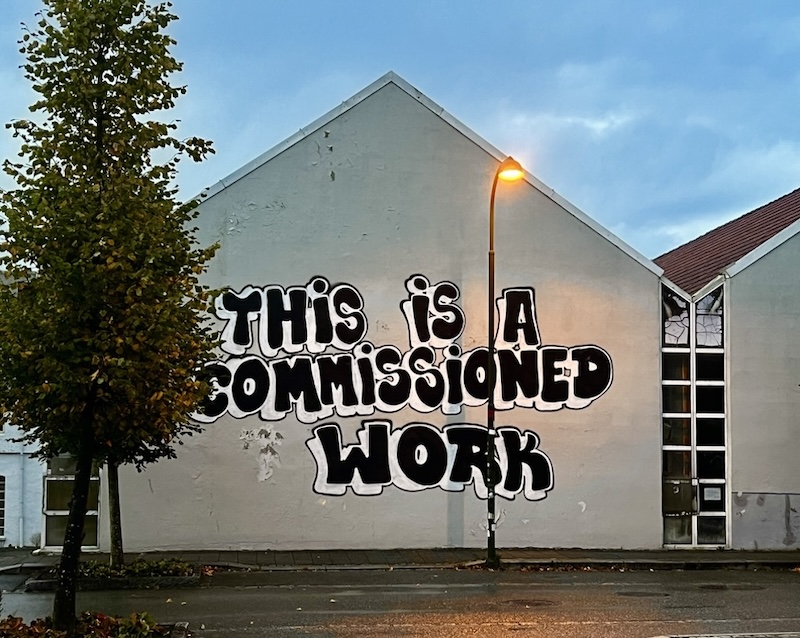
Nuart Aberdeen 2026 steps into this contradiction without trying to smooth it over.
After a year on pause, the festival returns and shifts the focus from image to language. Instead of building another programme around large figurative murals, this edition privileges artists who work with text, with sentences, with fragments of thought that operate directly in the public space without the need for translation into image (and the reverse need to translate it back for the public).
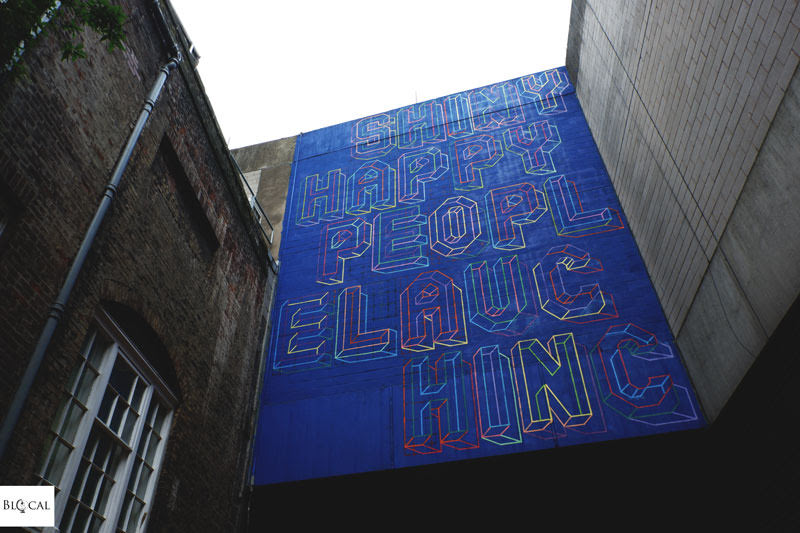
It is not a nostalgic move, even if it echoes earlier moments when language played a central role in both art and protest, or even when kids who loved art but couldn’t draw started spraying the letters of their graffiti name on the streets.
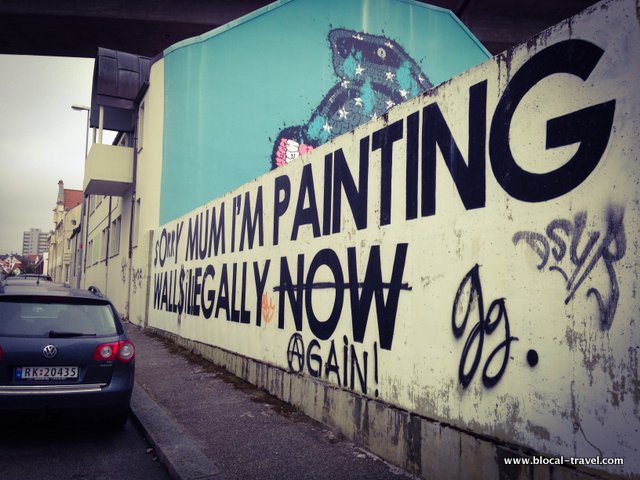
There is a structural decision behind it: if you reduce the emphasis on technique and scale, you inevitably widen the field of who can participate, or at least who can imagine themselves participating.
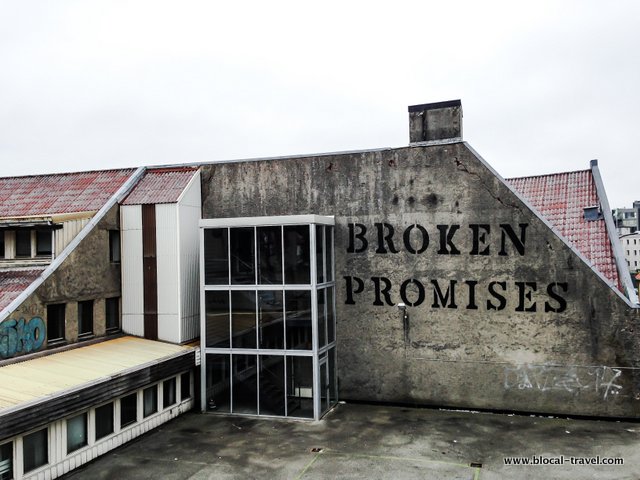
Text-based street art functions through a different logic. It does not try to impress at a distance or compete for attention through visual impact but it works through proximity and timing, through the encounter between a passerby and a line of text that interrupts their routine just enough to register.
Sometimes it reads like a statement, sometimes like a question, sometimes like a poem, sometimes like something overheard rather than authored.
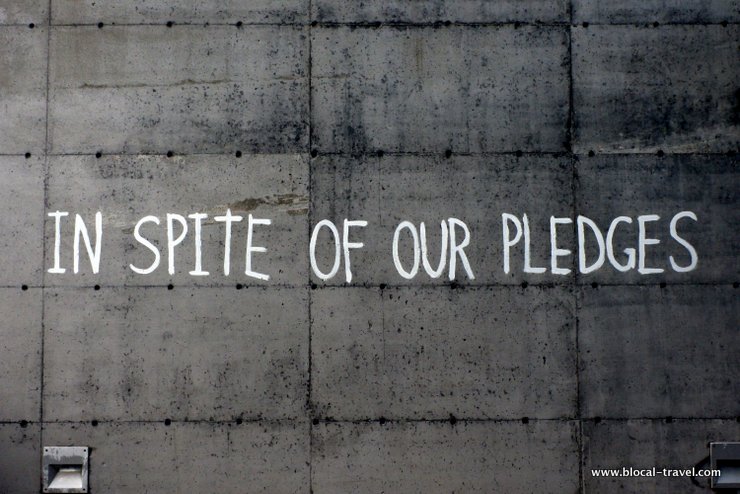
What it does, at its best, is shift the relationship between the work and its audience. You are not looking at it from afar, you are reading it, and reading implies a different kind of involvement. Even a short sentence can hold ambiguity, irony, or friction in a way that resists immediate consumption.
This is also why the reference to conceptual practices of the 1960s is not just decorative. When language entered the centre of artistic practice, it did more than change aesthetics, it altered what counted as art in the first place. It displaced skill as the primary marker of value and replaced it with intent, context, and position.
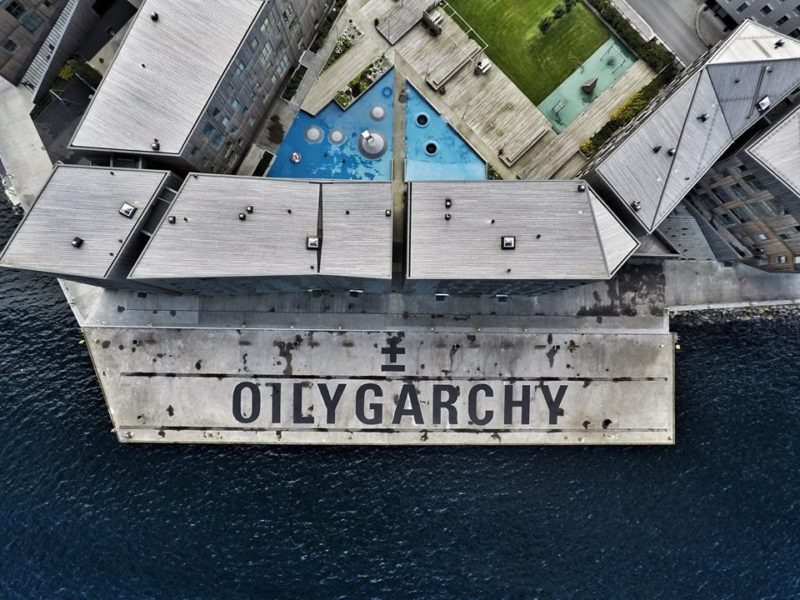
Nuart Aberdeen 2026’s emphasis on text follows a similar line of thinking, although it is grounded in the specific conditions of the street. If a mural often depends on infrastructure, a sentence depends on being there, on being written, on occupying space without asking for too much in return. That difference matters, because it reopens a possibility that has been narrowing over time.
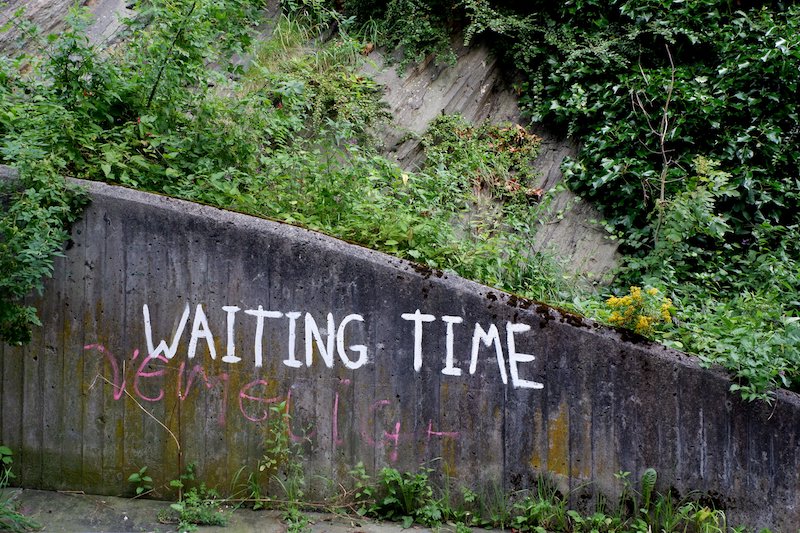
The festival has long played with the idea of Martyn Reed as the “uncurator”, and this edition leans into that role by pushing against the expectations that have formed around public art in cities that have grown used to being visually enhanced. When art is expected to beautify, anything that interrupts that expectation can feel out of place.
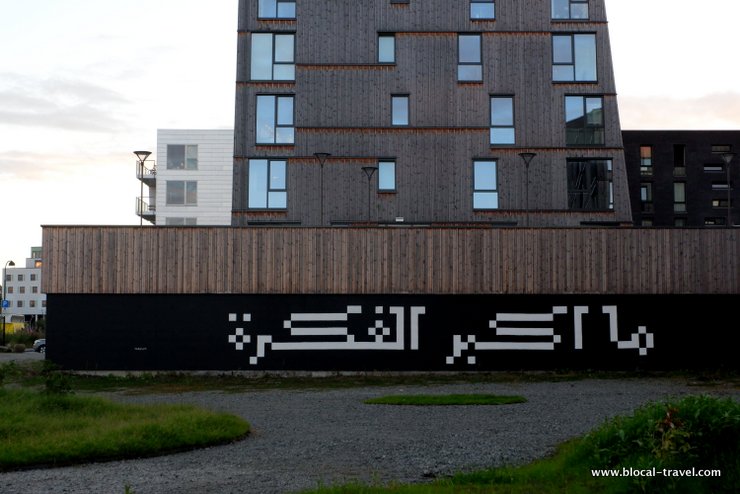
Text has that potential. It does not always resolve into something pleasing. It can be blunt, awkward, confrontational, or simply unclear, and in doing so it resists the smooth integration that murals often achieve within urban branding strategies.
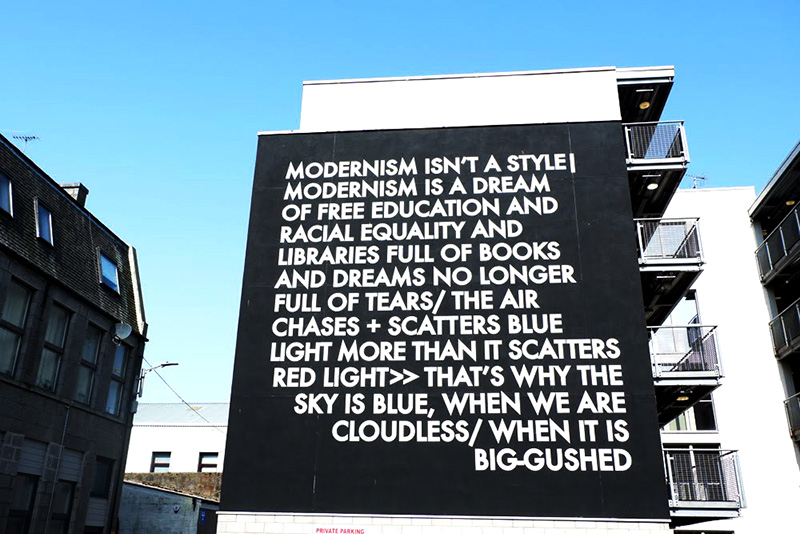
None of this suggests that murals disappear or that one form replaces another. The point is not substitution, but imbalance, and the attempt to correct it by shifting attention towards a practice that has been present all along but rarely given this level of focus within a festival context.
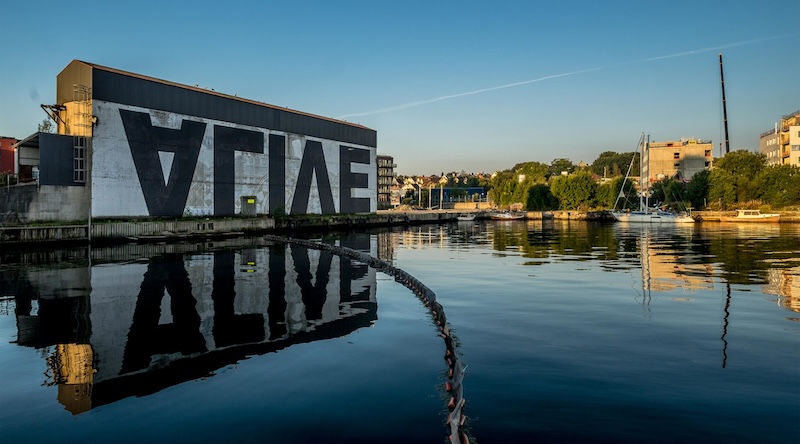
Nuart Aberdeen 2026 claims to be the first festival to centre poetry and text-based street work as its primary lens. Whether or not that claim holds in absolute terms, the intention is clear enough: to test what happens when language takes over the walls of a city for a moment.
Which leads back to the question that opened this. If writing returns to the street not as decoration but as presence, and if that writing is not selling anything or branding anything, then what exactly does it do to the way a city is experienced?
What does it mean, in practice, for a city to speak?
Nuart Aberdeen 2026: Artists Annoucement!
- Alisa Oleva (UK)
- Ciarán Glöbel (SCT)
- dr.d AKA Subvertiser (UK)
- HICKS (UK)
- James Klinge (SCT)
- KMG (SCT)
- Molly Hankinson (UK)
- Remi Rough (UK)
- Robert Montgomery (SCT)
- The Rebel Bear (SCT)
- The Writing Is On The Wall (UK)
- Trackie McLeod (SCT)
- V2k (LT – SCT)
See you at Nuart Aberdeen 2026!
The festival takes over the streets of Aberdeen, Scotland from April 22 to 26.
Alongside the interventions, Nuart Plus returns with its programme of talks, events, and panels, easily the most engaging part of the week.
Wednesday, April 22nd
Opening Night – Robert Montgomery Installation (20:00 – 22:00)
Thursday, April 23rd
Nuart Double Bill: Poetry in The Streets
20:00 – 21:00
Evan Pricco and Robert Montgomery in conversation.
21:15 – 22:15
Carlo McCormick’s Fireside Chat
20:40
Crit Time with Ed Hicks
Friday, April 24th
Nuart Plus Conference Day 1
11:00-11:10: Welcome and Introduction
Dr Susan Hansen (AU/UK) and Dr Catriona McAra (SCT)
11:10-11:50: Slapping the City – the Spatiality and Meaning of Stickers
Dr Erik Hannerz (SE)
11:50-12:30: The Writing’s on the Wall: What Do Historical and Contemporary Graffiti Have in Common?
Dr Emma Bryning (UK)
13:30-14:20: Constellations of Resistance: The Visual Language of Collective Defiance
Stephen Ellcock (UK) in conversation with Carlo McCormick (US)
14:20-15:00: Nine Centuries of Graffiti in the Heart of Neolithic Orkney
Dr Antonia Thomas (SCT)
15:20-16:00: Poetry on the Nile: Tourist Graffiti from the Romantic Era
Dr Hania El Houry (LB/DE)
16:00-16:40: Panel: Forms of Urban Creativity, Past and Present
Chaired by Dr Catriona McAra, with Dr Antonia Thomas, Dr Hania El Houry, Dr Erik Hannerz and Dr Emma Bryning.
Fight Club aka the Pub Debate (21:00)
Saturday, April 25th
Nuart Plus Conference Day 2
11:00-11:10: Welcome and Introduction
Dr Susan Hansen (AU/UK) and Dr Catriona McAra (SCT)
11:10-11:40: The Trans*ness of Vandalism: Poetry in the Streets
Erin Holly (UK)
11:40-12:10: 10 Years of flyingleaps: A Poetic Perspective
Adrian Burnham (UK)
12:10-12:40: Artist Talk: The City Never Sleeps
Alisa Oleva (UK)
13:40-14:20: Panel: Creating the Ephemeral
Chaired by Dr Susan Hansen, with Erin Holly, Adrian Burnham and Alisa Oleva
14:20-14:50: Artist Talk: From Wildstyle to Abstraction
Remi Rough (UK)
15:10-15:50: Artist Talk: The Trash Stratum
HICKS (UK)
15:50-16:30: Meet the Festival Artists Panel
Chaired by Evan Pricco (US) and featuring the festival artists
Art Tours
13:00 – 16:00 Street Art Tour by Inspiring City
17:00 – 18:20 Art Walk by Alisa Oleva
Nuart Closing Party (22:00 – 3:00)
Sunday, April 26th
Art Tours
13:00 – 16:00 Street Art Tour by Inspiring City
13:00 – 14:30 Art Walk by Alisa Oleva