Giulia Blocal
Every June, I find myself returning to Covilhã.
On paper, I come here as a media partner to document WOOL, Portugal’s first urban art festival, born in 2011. In reality, I come back for something much harder to describe. Over the years, WOOL has become one of those rare festivals where the artworks are only part of the story. What keeps drawing me back is everything that happens around them: the conversations with artists, the research behind each intervention, the long walks through the city, the encounters with residents, and the feeling that public art here still grows out of listening before painting.
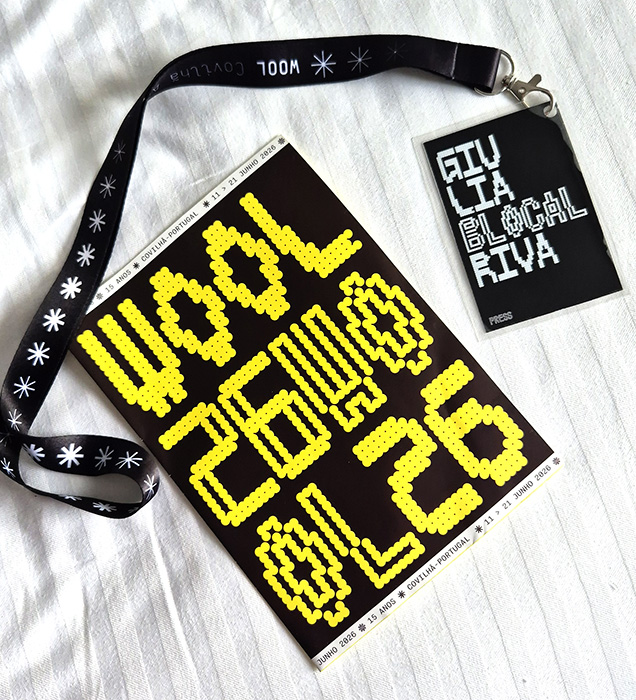
This year’s edition carried particular significance, celebrating fifteen years of WOOL. It was not simply an anniversary, but proof that an independent festival can grow without losing the values that made it meaningful in the first place. Context, community, curiosity, and the belief that public space can still be a place for dialogue remain at the centre of this festival, shaping an edition that once again invited artists to spend time understanding Covilhã before leaving their mark on it.
Following the Creative Process at WOOL 2026
The 2026 program offers a clear illustration of the principles that have guided WOOL since its foundation. Rather than imposing artworks onto the city, the invited artists were encouraged to engage with Covilhã’s landscapes, histories, institutions and everyday life, developing interventions that emerged from observation, research and dialogue.
- Following the Creative Process at WOOL 2026
- Nasarimba at WOOL 2026: A Prelude to the Festival
- Tellas at WOOL 2026: When the Wall Becomes a Sketchbook
- Projeto Ruído at WOOL 2026: An Album of Memories for Covilhã
- Ben Johnston at WOOL 2026: A New Day for a New Neighbourhood
- Mariana, a miserável at WOOL 2026: Speaking the Language of Covilhã
- Addam Yekutieli aka Know Hope at WOOL 2026: Looking Through a Telescope
- Octavi Serra at WOOL 2026: Giving Forgotten Places a Voice
- Building WOOL Together
- My Covilhã Street Art Map
- Watch my candid vlog: Behind the Scenes of WOOL 2026
Nasarimba at WOOL 2026: A Prelude to the Festival
The Canadian duo Nasarimba completed their mural before the official opening of the festival, so by the time we arrived in Covilhã, the work was already there waiting for us. In a way, it served as a quiet introduction to many of the themes that would unfold throughout the following days: close observation, local references, architectural details, textures, and the kind of attentive engagement with place that defines WOOL at its best.
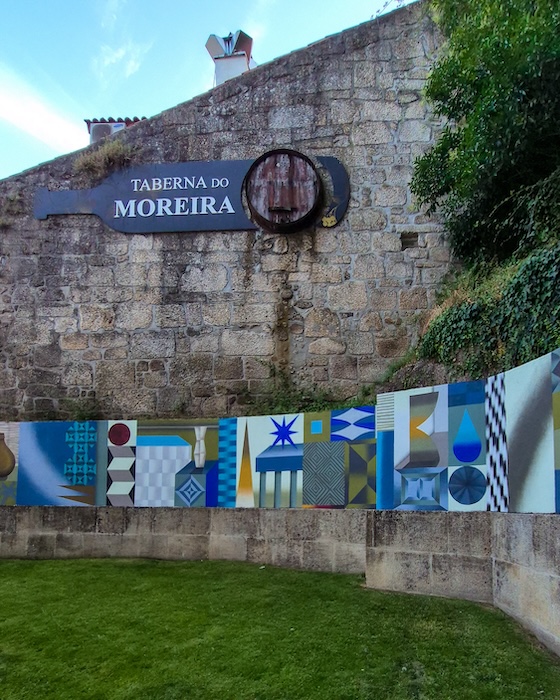
Developed through a careful reading of the local environment, the mural incorporates visual elements familiar to residents, showing how contemporary urban art can emerge from direct observation rather than from the repetition of a pre-existing formula. I was sorry not to meet them in person, because judging from the work they left behind, they seem like the kind of artists I would have loved to speak with, those genuinely interested in the place they were working in.
Tellas at WOOL 2026: When the Wall Becomes a Sketchbook
Among the invited artists, Tellas perhaps embodies WOOL’s approach most clearly. One of the pioneers of the Italian street art scene, the Sardinian artist is known for translating elements of local ecosystems into large-scale painted compositions, and for his intervention in Covilhã he spent time exploring the Serra da Estrela, the highest mountain range in mainland Portugal, photographing flowers and plants that later became the basis of a freehand mural.
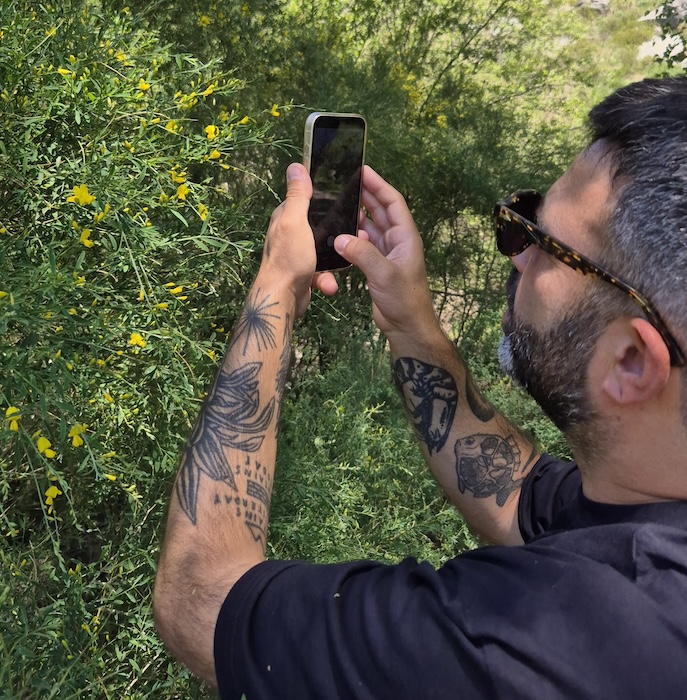
“There’s no finished sketch waiting to be painted. I start from the photos I took in the mountains a few days ago and build the composition directly on the wall, changing things as I go. I add things, remove things, move things around. In a way, the wall becomes my journal, and I’m excited to discover what it will become.”
Tellas
Painted without a preliminary sketch and rendered in a single blue tone reminiscent of cyanotype, the work resembles a contemporary herbarium, transforming direct observation of the surrounding landscape into a delicate visual archive. It is also one of the clearest examples of WOOL’s willingness to support experimentation. Tellas told me that this monochrome series began in Rome, with his mural in Via dell’Acqua Bullicante, and that he has tried to propose this direction several times since, though only a few festivals have given him the freedom to pursue it.
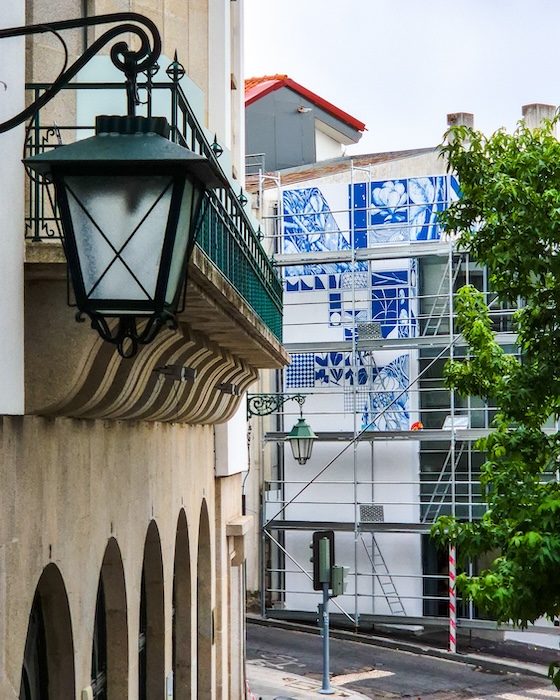
I was especially happy to finally meet him in Covilhã, after admiring his work for years without ever crossing paths in person. He worked with Natalia, his partner and an amazing abstract painter herself, and the two of them brought a calm, focused, generous presence to the wall. What I loved most about the piece is that it is delicate without disappearing. It takes its place quietly, through precision rather than volume, much like Tellas himself, who has been painting for years with talent, consistency, and professionalism, while always seeming to stay far from the spotlight. Then, when you notice his work, you do not forget it. This mural has the same effect: clean, precise, almost like a sketchbook opened onto the wall, yet full of texture and depth. No filters, no effects, no unnecessary noise, just the simplicity of a line and the fragile outline of a small mountain flower.
Projeto Ruído at WOOL 2026: An Album of Memories for Covilhã
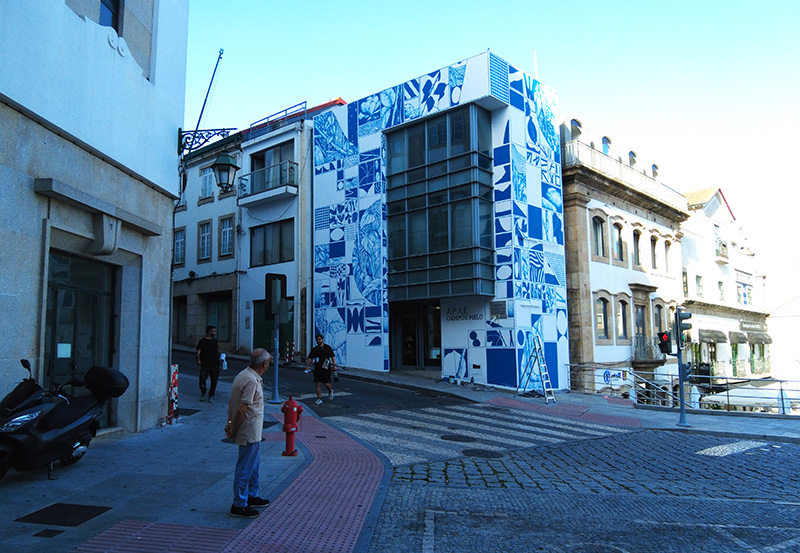
Another deeply contextual mural is the one created by Projeto Ruído. Returning to WOOL after the disappearance of their previous mural in the city, the Portuguese duo created a new intervention dedicated to the centenary of Orfeão da Covilhã, one of the city’s most important cultural institutions. Drawing from archival photographs, sheet music, historical documents, and local references, the mural connects cultural memory with the artists’ visual vocabulary of geometry, abstraction, and figurative elements, transforming a commemorative project into a reflection on continuity and collective identity.
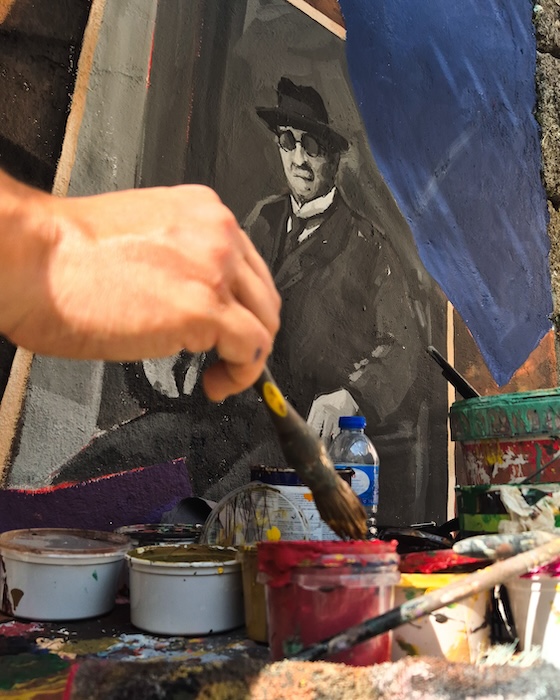
I was especially happy to see them again, as the last time we had met was eleven years ago, when they came over for dinner at my place. This time, I found them in Covilhã working on what quickly became one of the most loved murals among local residents, precisely because it spoke so directly about them and about an institution that means so much to the city. Wanting to understand the process more closely, I also visited the Orfeão, where Luís and Graça, two members of the choir, welcomed me inside and showed me the archive: old photographs, scores, gifts from other choirs, and all the visual traces that later reappeared in the mural.
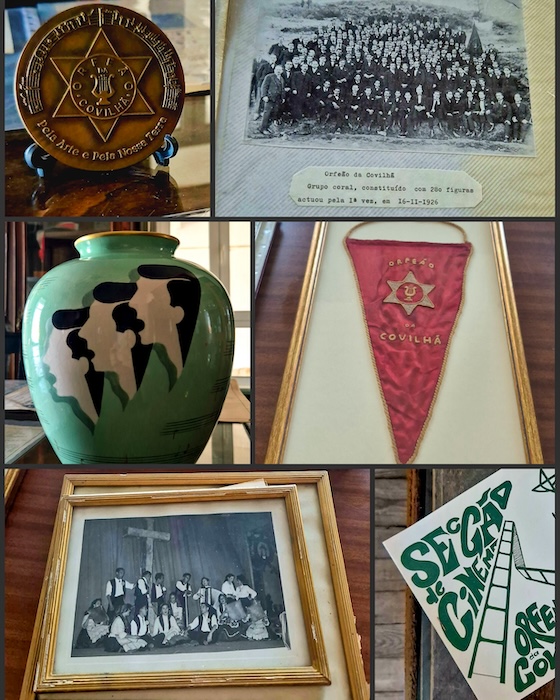
In that sense, the work feels almost like a collage, a public album of memories offered back to the city. Projeto Ruído developed their sketch on site, after visiting the archive on their first day, taking photographs and working from the original material they had encountered there. The result is deeply touching because it does not simply illustrate the history of the Orfeão. It gathers fragments of that history and turns them into a shared image, one that residents could immediately recognize as part of their own cultural memory.
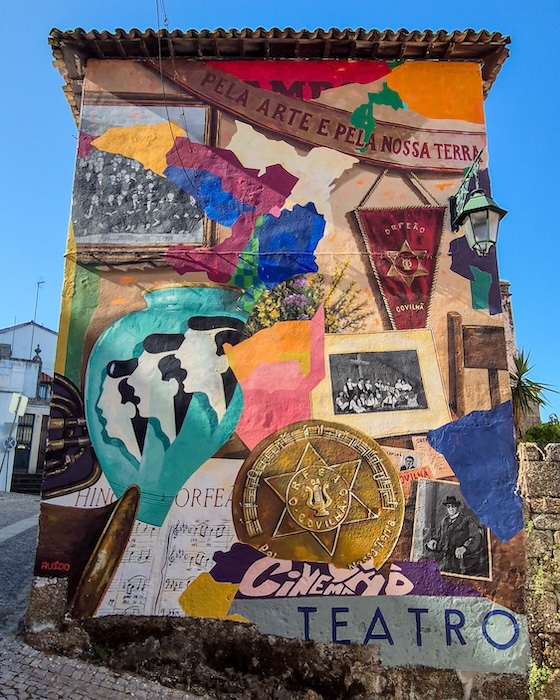
One of the details I loved most happened during the mini-concert organized by WOOL next to the mural in progress, a format that invites residents to gather around the walls while they are still being painted to become part of the creation process. Since the mural was dedicated to the Orfeão, I expected a choir concert. Instead, there was an electronic music DJ set by a musician who had once been a student there; another reminder that cultural memory is alive, and always moving forward.
Ben Johnston at WOOL 2026: A New Day for a New Neighbourhood
A different relationship with place can be found in the work of South African artist Ben Johnston. Known internationally for his large-scale typographic murals, Johnston brought his distinctive lettering practice to Covilhã through the phrase Novo Dia (“New Day”), taken from a fado by Amália Rodrigues dedicated to the city.
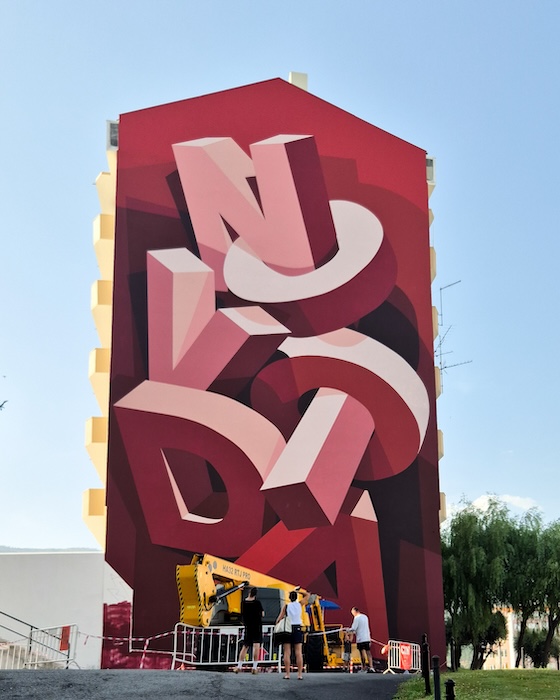
Installed in a neighbourhood that had never before hosted a WOOL intervention, the work marks a symbolic expansion of the festival beyond its traditional geography. Surrounded by schools and everyday pedestrian activity, the phrase acquires additional layers of meaning, connecting local cultural memory with ideas of renewal, education, and future generations.
I especially liked the choice of colours, which sit naturally within the surrounding architecture and give the mural a crisp, elegant presence. Like much of Ben’s work, it feels incredibly sharp and precise without becoming cold or overpowering.
Away from the wall, however, my favourite memories involve his two-and-a-half-year-old son, Grey, who was easily his father’s biggest fan. Since Ben was painting in a different neighbourhood from the rest of the festival, they would only meet again in the evening, and every time Grey spotted him from afar he would sprint towards him shouting, “Daddyyyy!” with the kind of enthusiasm only a toddler can have. He proudly told everyone that his dad was painting “the biggest wall,” and on the final day insisted on helping, picking up a brush and adding a few strokes himself.
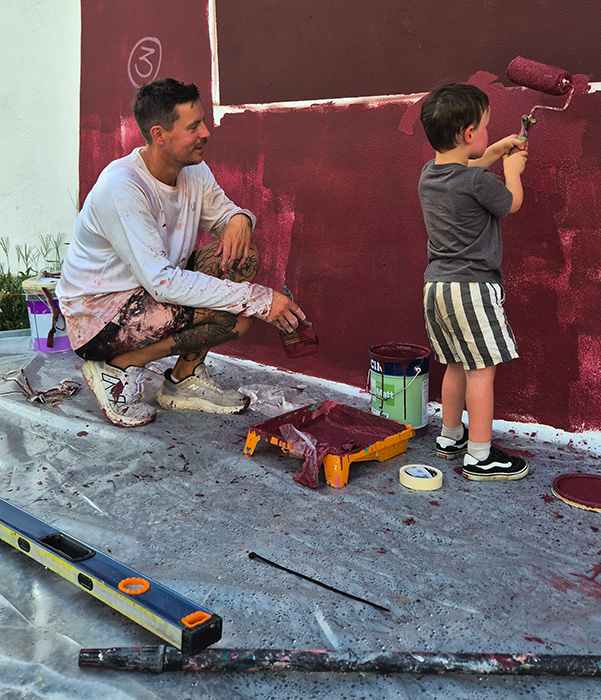
For a mural built around the words Novo Dia, it somehow felt like the perfect ending. A work about new beginnings, painted in a neighbourhood full of schools, finished with the smallest member of the family proudly leaving his own mark on the wall. It was one of those moments that cannot be planned, yet somehow captured the spirit of WOOL perfectly.
Mariana, a miserável at WOOL 2026: Speaking the Language of Covilhã
Questions of language and identity lie at the centre of Mariana, a miserável’s contribution to WOOL 2026. Originally trained in graphic design before moving increasingly towards ceramics, the Portuguese artist developed a series of tile-based interventions installed across the historic centre, each one featuring an expression drawn from the local dialect and illustrated through her characteristic visual language.
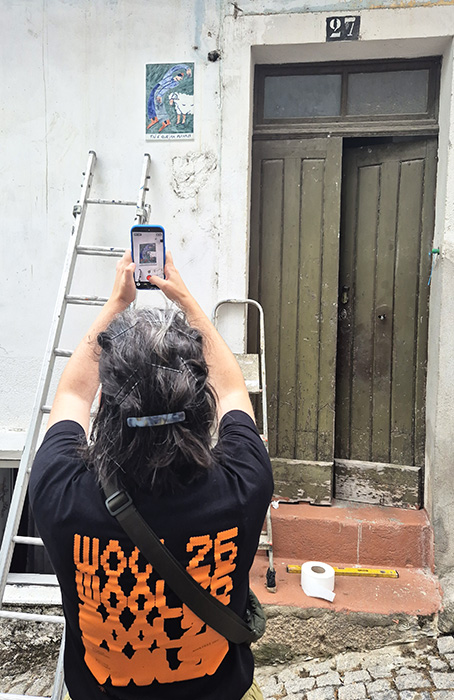
“This project is a series of small tile panels spread around Covilhã, all based on local expressions. I had to ask the team to explain the meaning of each one because I’m from Porto and the dialect is completely different. It’s funny how different dialects can be when Portugal is such a small country.”
Mariana, a miserável
I did not know Mariana’s work before this edition, and discovering it was one of those small WOOL surprises that reminded me how sharp Lara’s eye is when it comes to finding artists. Mariana is also incredibly fun to talk to, sunny and quick-witted, and over the course of a few conversations I learned that she used to paint murals before focusing more deeply on ceramics and illustration. She now follows the whole ceramic process herself, from the drawing to the final firing, using the kiln in her own studio.
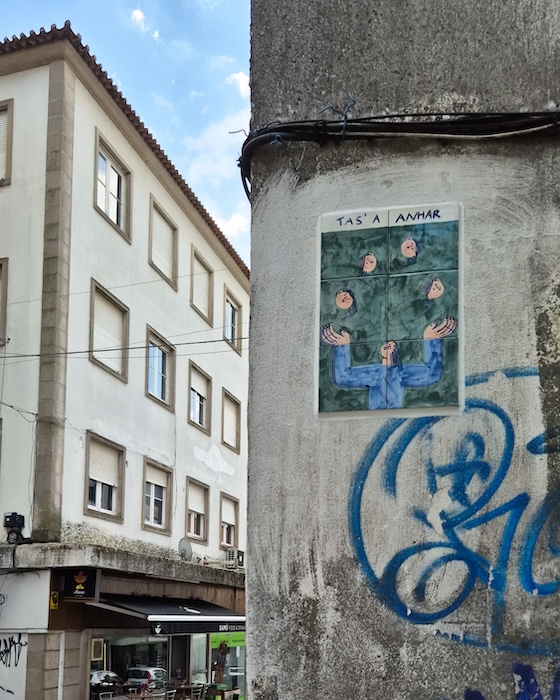
Her intervention in Covilhã works precisely because it does not try to be monumental. These small tiles ask you to pay attention, to slow down, to notice words, jokes, sayings, and expressions that belong to the city’s everyday life. They also ended up having an unexpected sound element: whenever residents noticed them for the first time, they would often read the expression out loud, drawing the attention of other passers-by who might have missed the tile at first. When I asked people to translate the expressions into English for me, no one could quite find the right words, which made the whole project even more interesting, as the work is rooted in something so local that it resisted easy translation.
I also loved hearing about a ceramic street art project Mariana created in Porto, where she installed tiles on abandoned houses with the phrase “people could live here.” It says a lot about the way she understands public space: not as a neutral surface to decorate, but as a place where small objects can carry precise, tender, and politically charged messages. In Covilhã, the tone is lighter and more humorous, but the logic is similar: her tiles make the city speak in its own words.
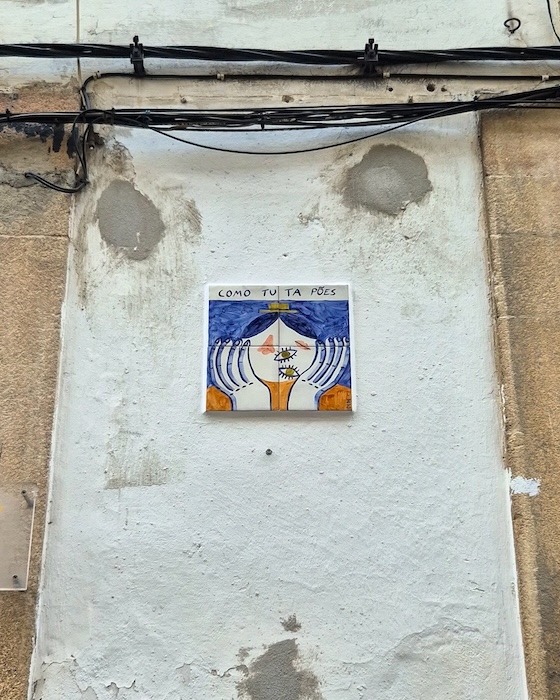
And maybe this is exactly the kind of street art I love most: a small glitch in the everyday routine, something you almost miss at first, until it makes you stop, read, laugh, ask questions, and see the street differently.
Addam Yekutieli aka Know Hope at WOOL 2026: Looking Through a Telescope
Other artists approached the territory through its social and political dimensions. Israeli artist and activist Addam Yekutieli aka Know Hope, an outspoken supporter of Palestinian rights, presented two installations exploring colonialism, distance, and perception. Observed through a telescope positioned at a distance from the works themselves, the interventions transform the act of looking into a metaphor for the way societies interpret complex histories and ongoing conflicts.
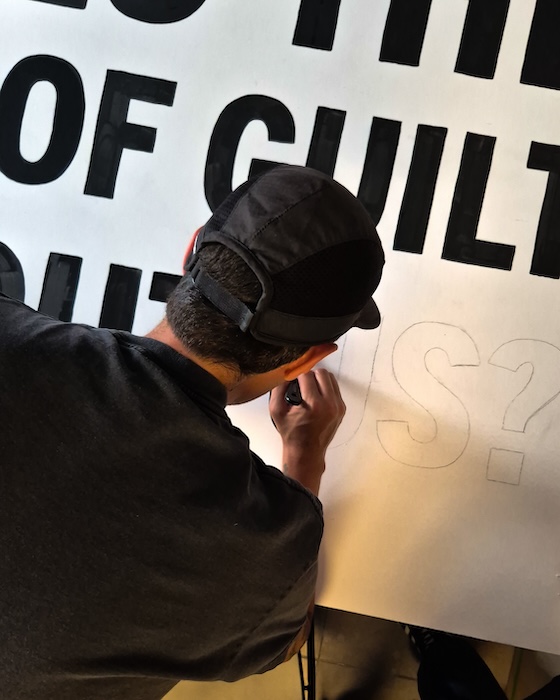
“These pieces use the notion of distance, both physical and symbolic. The two signs can be read up close, and they contain two corresponding texts, but from each location you cannot read the other one. Distance plays a large part in the work. In the end, it is a piece about colonialism: how it manifests in different forms and different places, how it is treated in different ways, and how it still shares many of the same traits. I think people have a tendency to deflect, so the piece deals with the externalization and internalization of responsibility and guilt, both for colonial pasts and colonial presents.”
Addam Yekutieli
I was particularly happy to meet Addam again. We first met back in 2017 at Nuart Festival, and the article I wrote about his work that year is still one of my favorites. During WOOL we had several long conversations, and I found his perspective especially interesting. As an Israeli artist who openly supports Palestine, his position is quite unique, and the way he approaches these subjects is remarkably thoughtful, sensitive, and deeply human.
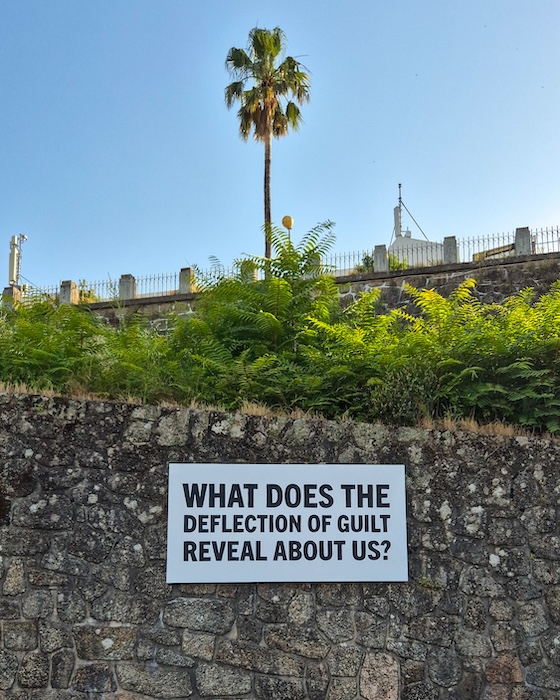
Unfortunately, I had to leave Covilhã before the installations were fully assembled with the telescope, but I spent enough time talking with him to understand the thinking behind the project. What stayed with me most was his insistence that breaking cycles of violence requires moving beyond simply pointing fingers at one another. Instead of treating different histories as competing narratives, he invites us to step back and look at the broader structures that allow violence to repeat itself. In that sense, the telescope is much more than a viewing device: it’s part of the artwork itself, asking us to create enough distance to see patterns that remain invisible when we stand too close.
“The texts are about deflection, the abstraction of history, and the position of the person reading them: who is reading, from where, and how sometimes the answer requires a certain distance before we can really see these things.”
Addam Yekutieli
Octavi Serra at WOOL 2026: Giving Forgotten Places a Voice
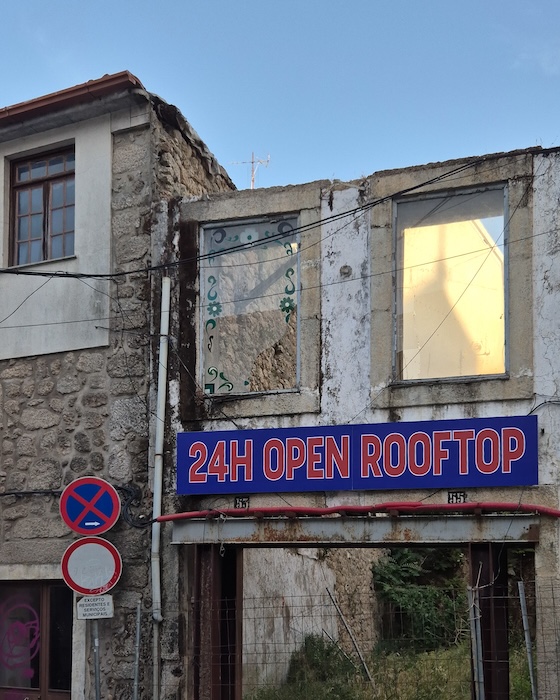
Catalan artist Octavi Serra turned his attention towards another layer of Covilhã’s history. Occupying abandoned shops, broken windows, and former industrial buildings, his interventions use irony and visual disruption to draw attention to spaces often overlooked in everyday life. In a city historically shaped by the wool industry and still marked by traces of economic transformation, these works encourage a renewed reading of the urban landscape and the stories embedded within it.
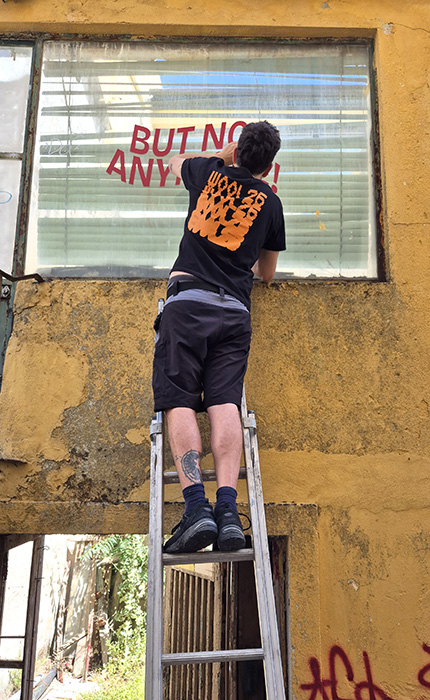
I was also very happy to see Octavi again, after first meeting him two years ago at CVTà Street Fest. I have always found his interventions brilliant because they are often minimal in form, yet incredibly precise in the way they reveal what is already there. He does not need to add much to a place. A small gesture, a word, an object, or a visual contradiction is enough to make the street feel suddenly strange, funny, and uncomfortable in the right way.
Building WOOL Together
If the murals are what first catches your eye, the community projects are what reveal WOOL’s deeper identity.
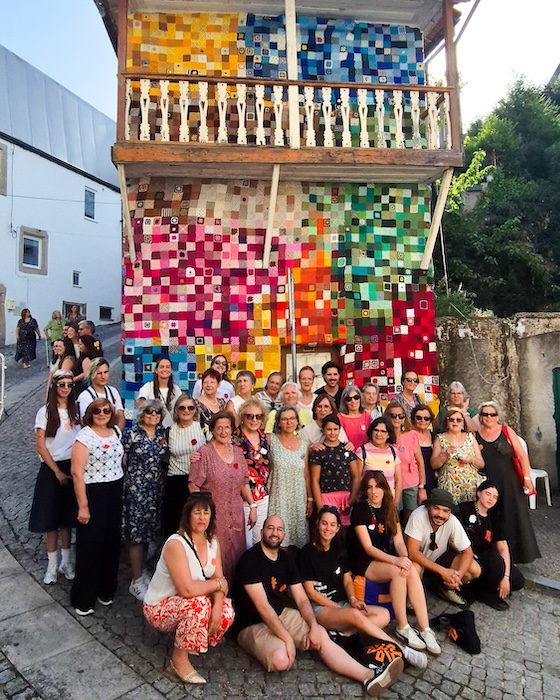
Beyond the artistic interventions, community participation remained at the heart of the anniversary edition. The most ambitious example was A Nossa Casa (“Our House”), a large-scale collective project developed over several weeks with local residents.
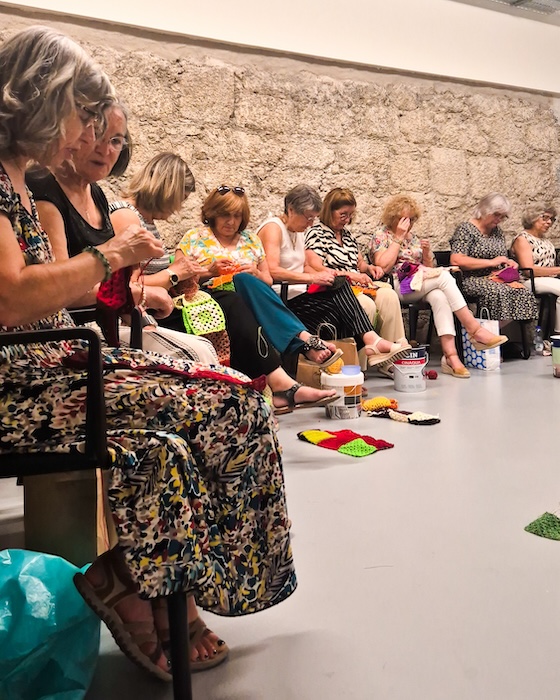
Through a series of workshops, participants came together to crochet, stitch and assemble thousands of handmade textile elements that were later used to transform a house in Covilhã’s historic centre into a public artwork. The project drew upon the manual knowledge, social bonds and textile traditions that have shaped the city for generations, turning individual contributions into a collective expression of care, belonging and shared authorship.
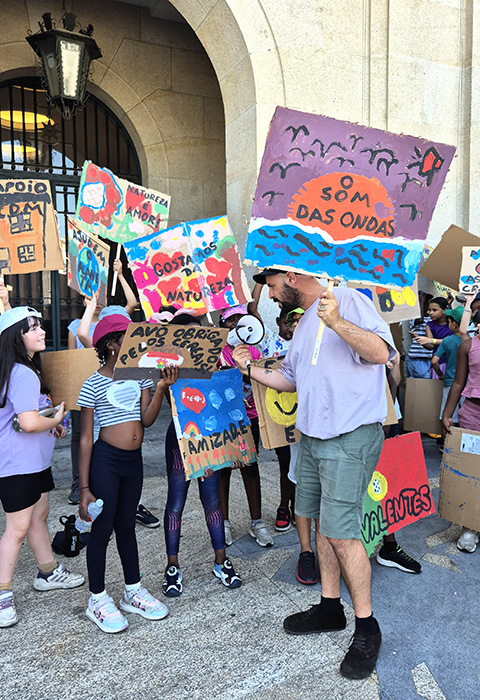
Another significant participatory initiative was Marcha pela Esperança (March for Hope), coordinated by artist Mantraste. Through workshops involving local schools, children and young people were invited to reflect on their fears, concerns and hopes for the future, translating these thoughts into hundreds of handmade placards. The resulting public march transformed personal reflections into a collective civic gesture, bringing young voices into the centre of public space and reinforcing the festival’s belief that cultural participation begins with listening.
Participation also unfolded through a series of smaller but equally meaningful encounters. Mini-concerts held beside murals in progress invited audiences to experience artworks while they were still taking shape, creating informal spaces where music, conversation and artistic production could coexist. Public debates addressed questions of cultural access, citizenship and participation, while screenings and guided tours expanded opportunities for dialogue between artists, residents and visitors.
Together, these projects demonstrate that WOOL festival creates situations in which artworks, conversations, shared experiences and local knowledge become part of the same cultural process. In this sense, the anniversary programme reflects the broader trajectory of the festival itself: a long-term commitment to building relationships between people and place through contemporary artistic practice.
What makes WOOL so special is that it builds artworks in public space while also creating the situations around them: conversations, encounters, shared meals, debates, and opportunities for people to become part of the process rather than simply observe its results.
For me, that sense of community also exists in the temporary relationships that form during these ten days. Every year I return to Covilhã and reconnect with the WOOL team, with artists I have met elsewhere, and with new people I end up spending long days with. By the end of the festival, it always feels as though we have known each other for much longer.
That feeling became especially clear on Octavi Serra’s last evening in the city. A small group of us spontaneously decided to follow him as he installed his final interventions before leaving. We wandered through the streets together, watched the works appear one after another on abandoned buildings, talked between installations, and stayed until the very end.
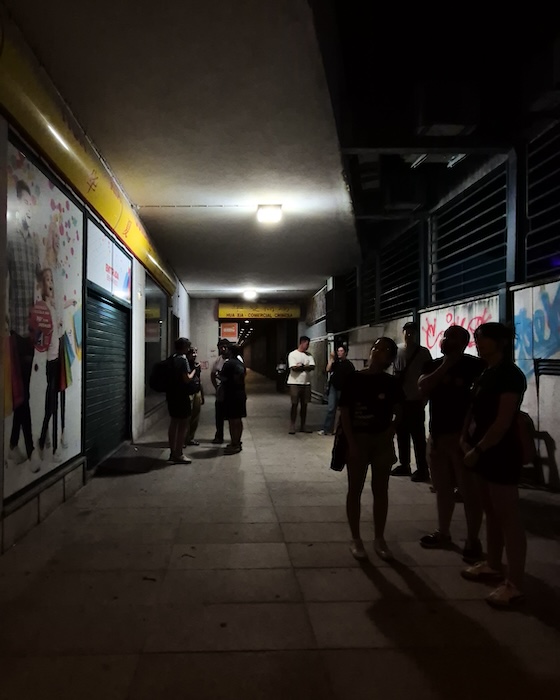
Looking back, that evening has become my favourite memory of WOOL 2026. It reminds me that the festival’s greatest achievement has never been measured by the number of murals it produces, but by the relationships it patiently builds between artists and residents, visitors and places, and people who, even if only for a few days, become part of the same community.
My Covilhã Street Art Map
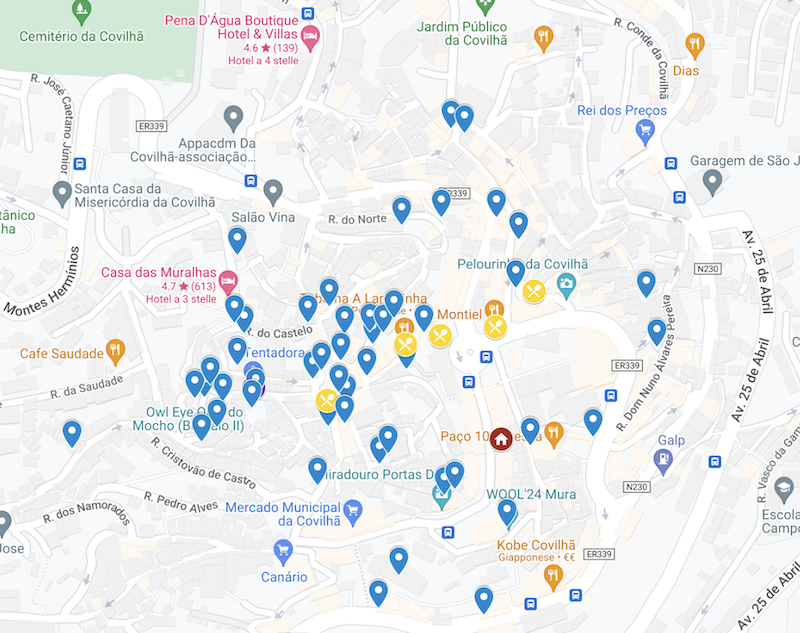
Get my google map of street art in Covilhã and start exploring!