Giulia Blocal
From June 11 to 21, WOOL Festival returns to Covilhã to celebrate 15 years of urban art, community, and public space in Portugal’s former textile city. More than a mural festival, WOOL has become one of Europe’s most thoughtful and community-driven urban art events, bringing artists from around the world into dialogue with the city and its residents.
Portugal’s first street art festival turns 15 this year, but what keeps bringing me back to Covilhã has never been the number of murals added to the city.
What makes WOOL different is the continuity of the relationships it creates: between artists and residents, between artworks and the territory around them, between the festival and the people who return to it year after year. Taking place from June 11 to 21, WOOL 2026 is not just an anniversary edition but proof that an independent, deeply place-based festival can grow over fifteen years without losing its identity.
For me, returning to WOOL every year as a media partner has also become a way of reconnecting with the city itself and with the people behind the festival. Over the years, I have seen firsthand the amount of work, research, care, and curatorial precision that goes into every edition. Nothing here feels random or rushed. Every wall has a reason to exist, every intervention emerges from conversations with the local context, and every artwork becomes part of a wider dialogue with Covilhã’s history, architecture, and community.
That is probably what I appreciate most about WOOL: it never feels like a festival built around virality or endless production, but rather something closer to a collective ceremony than a conventional event.
From Tellas to Know Hope: The Artists of WOOL 2026
One of the most interesting aspects of spending time in Covilhã during WOOL is witnessing the artists’ process up close. Nobody arrives here with a concept to impose onto the city. Artists spend time walking through the streets, observing the textures of the buildings, listening to stories, studying the landscape and the rhythm of the place before even starting to paint. The research behind each intervention is thoughtful and deeply rooted in the territory, and documenting that process always leads to fascinating conversations about the role public art can still play today.
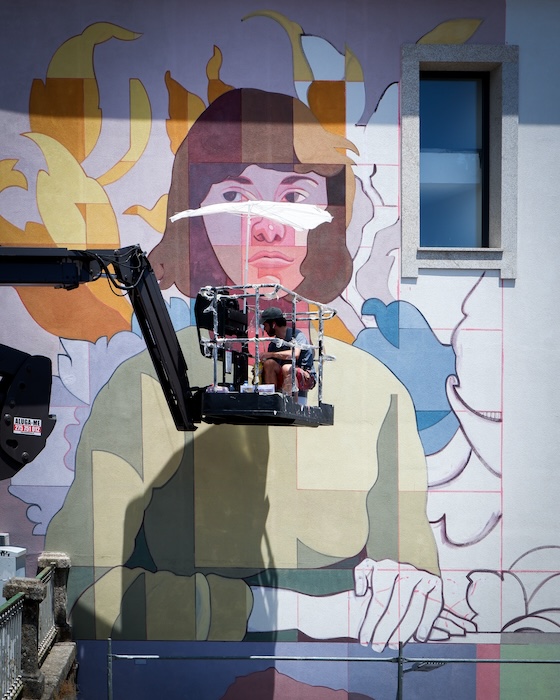
This year’s lineup is particularly exciting. Italian artist Tellas, whose work explores organic forms and the rhythms of nature, will create a new mural in the city center, and I am especially curious to see how he will reinterpret the landscape surrounding Covilhã. Portuguese collective Projeto Ruído will return to WOOL after the disappearance of their previous mural in the city, creating a new work dedicated to the 100th anniversary of Orfeão da Covilhã.
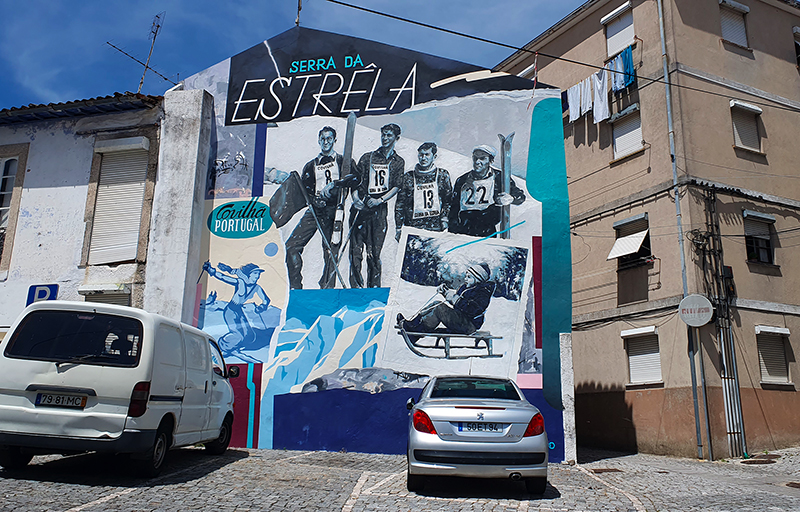
South African artist Ben Johnston will paint WOOL’s first mural in the lower part of the city, opening a new chapter in the festival’s relationship with the urban landscape, while Mariana and Know Hope will leave behind more intimate, human-scale interventions that invite slower and more personal interactions with viewers.
Another intervention that already caught my attention is the recent work created in Covilhã by the Canadian collective Nasarimba. Like all good teasers, it already contains many of the seeds of the upcoming edition: close observation of the territory, dialogue with local architecture, and the reinterpretation of textures and details that residents recognize as part of their daily environment. The result is not an artwork detached from the city or created solely to fill a portfolio, but something in which the local community can genuinely recognize itself.
Beyond the Murals: Community, Participation, and Collective Creation at WOOL 2026
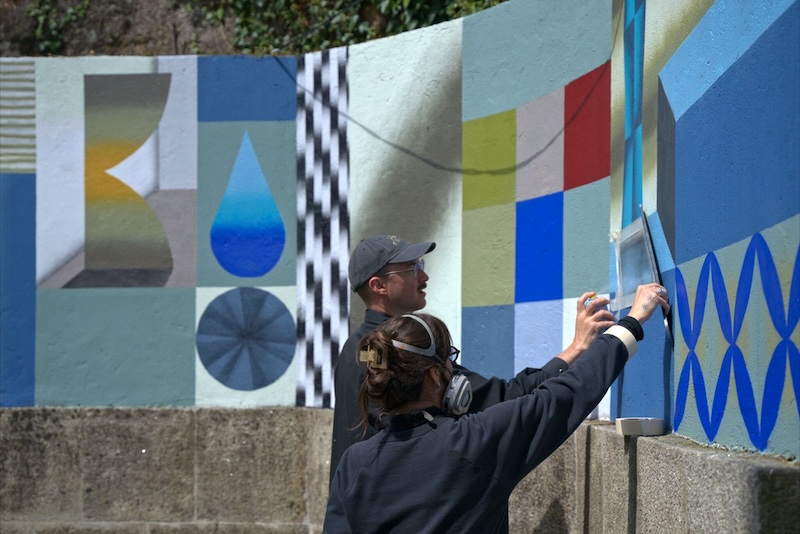
And that sense of participation remains at the core of WOOL, where the community is invited not only to experience the artworks but also to actively take part in creating them.
Among this year’s community-driven projects is “A Nossa Casa”, a collective initiative inviting residents to contribute crocheted and knitted pieces that will come together to cover a house in Covilhã’s historic center, transforming it into a large-scale public artwork. “Marcha da Esperança”, led by artist Mantraste, will involve local students expressing their hopes and fears for the future through workshops and a public march through the city. “WOOL Circular” continues the festival’s ongoing reflection on reuse and sustainability, transforming old festival banners into new objects and collaborative installations through partnerships involving artists, universities, and prison communities.
The beloved Community Lunch also returns this year after becoming one of the warmest moments of past editions, reinforcing the feeling that WOOL is built as much around gathering people together as around producing artworks.
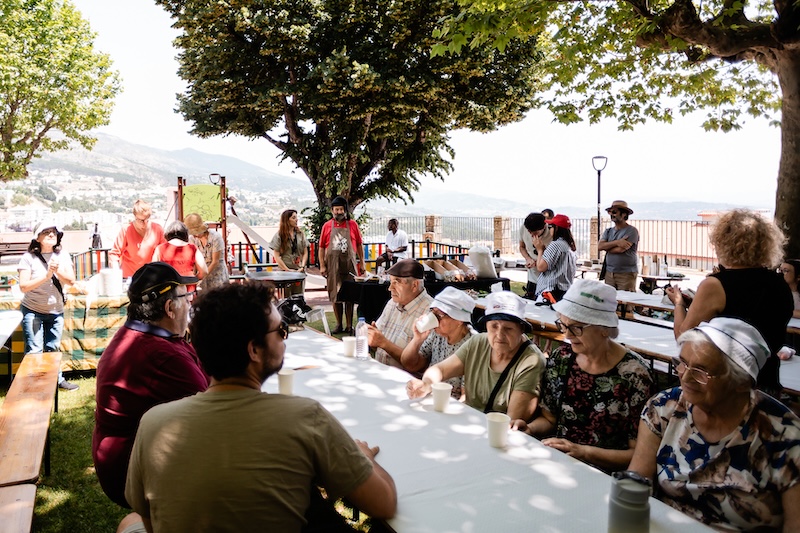
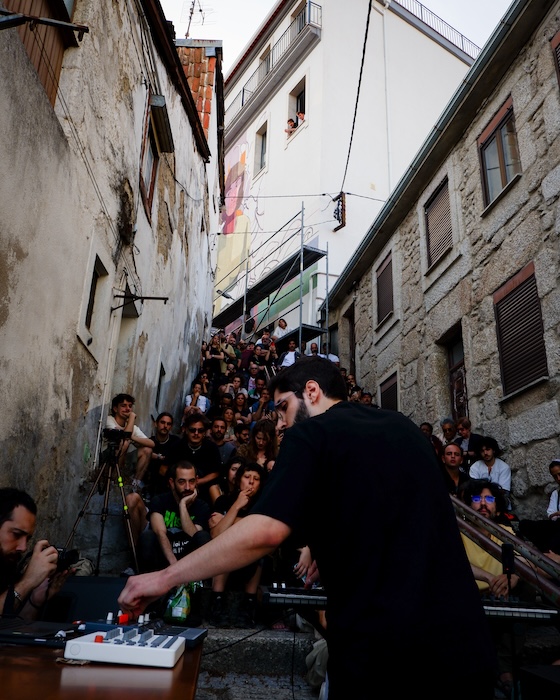
Beyond public art, the program once again expands into music, cinema, literature, photography, talks, workshops, and informal moments of exchange spread throughout the city. One of my favorite recurring moments remains the late-afternoon mini concerts organized next to murals still in progress, where visitors can experience the artworks while they are still taking shape and discover unexpected corners of Covilhã at the same time.
After several years of returning to WOOL, what continues to stay with me is not only the artworks themselves, but the atmosphere created around them. During the festival, Covilhã never feels invaded but rather crossed slowly, attentively, and collectively, and maybe that is precisely why WOOL still feels so meaningful after fifteen years.
I’m already looking forward to being back in Covilhã this June. 😎
Get into the WOOL mood by watching last year’s slightly chaotic, sleep-deprived, mural-filled vlog from Covilhã: