This editorial on the institutionalization of street art was originally published in my street art newsletter, Beyond the Walls, which lands in inboxes on the 1st of every month with reflections and unexpected finds. This excerpt is from the June 1st, 2026, edition. Subscribe here to receive future issues.
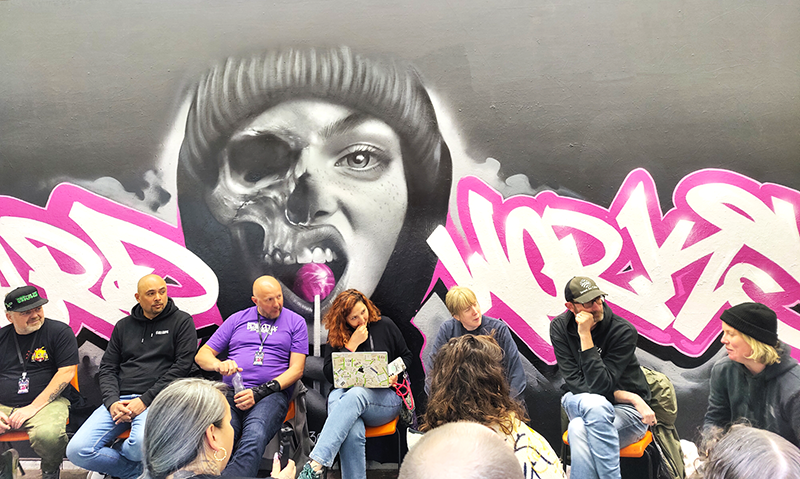
This month’s editorial grows directly out of a panel I recently moderated at the Yardworks Festival in Glasgow, focused on legality, artistic freedom, and the contradictions surrounding legal walls within graffiti and street art culture.
I have published the full panel transcript for those who want to read the complete conversation, while here I continue to unpack the ideas, tensions, and provocations that remained unresolved during the discussion, for lack of time.
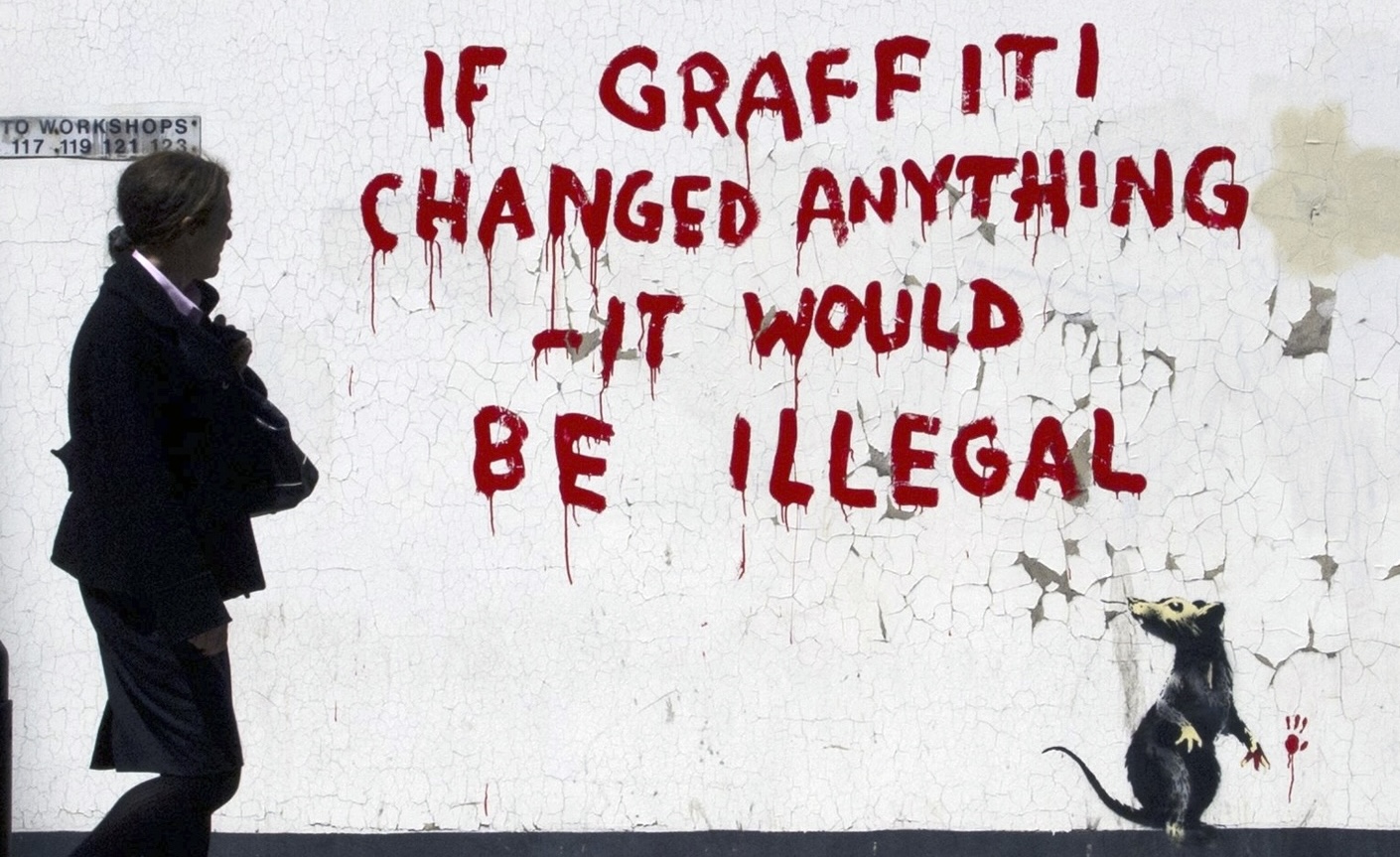
What happens when a culture born from direct, unauthorized interaction with the city becomes a curated cultural infrastructure?
While preparing for the panel, I knew that this was the question I actually cared about the most. Yet, like often happens during public discussions, we never fully arrived there. We spoke about legal walls, mural festivals, artistic freedom, institutional compromises, and creative autonomy, but the deeper contradiction remained mostly beneath the surface.
Because the real question is not whether legal walls are “good” or “bad,” but what happens when a cultural practice born from a spontaneous and direct negotiation with urban space slowly transforms into an organized cultural infrastructure made of permits, sponsors, public funding, and municipal approvals.
The paradox is that, while mural festivals are often presented as a celebration of street art culture, the more institutionalized and production-heavy they become, the more selective they inevitably are, ultimately contradicting the openness and accessibility that once stood at the core of the street art movement.
The more resources a festival needs in order to exist, the more stakeholders become involved in deciding who gets to paint, what kind of work is acceptable, and what kind of aesthetics are considered valuable.
In other words, access to walls is no longer direct but mediated, with gatekeepers now standing between the artist and the city, a shift that inevitably transforms the culture itself.
Moreover, the obsession with monumentality has not only transformed the visual language of street art, but also narrowed the psychological perception of who belongs in that space.
Today, many people no longer imagine themselves painting a wall unless they possess extraordinary technical skills, a polished portfolio, institutional legitimacy, or access to festival networks, even though graffiti and street art were originally born precisely as direct and accessible forms of interaction with the city, practices that existed outside institutional frameworks rather than being filtered through them.
At the same time, however, I don’t want to romanticize illegality entirely, because the risks embedded within the practice have historically excluded many people as well. The possibility of arrest, fines, or police violence inevitably affects people differently, often discouraging those who are already more vulnerable or marginalized, including people of colour, while the necessity of moving through the city at night, frequently in isolated spaces, has also kept many women away from certain forms of unsanctioned street art altogether.
Legal walls and mural festivals have undeniably opened the field to artists who may never have entered the culture otherwise, and this is something that should absolutely be acknowledged. The problem begins when the desire to make street art more publicly acceptable also starts flattening its visual language and its complexity.
One of the most revealing moments during the panel came when Izzie Hoskins spoke about the public backlash received after replacing a figurative mural portraying Jimi Hendrix with a much more abstract intervention by graffiti writers Taps and Moses, when many people suddenly felt compelled to complain after being confronted with a work they could not immediately decode aesthetically. Interestingly, this is exactly the same dynamic I witnessed in Rotterdam during the All Caps Festival, when Eneri painted a large-scale pixação piece on a prominent wall, triggering intense public reactions and debates around what is considered acceptable or even recognizable as art within the public sphere. Ironically, the curator of that festival, Daniel Claessens, was sitting on the panel in Glasgow, but unfortunately we did not have enough time to fully unpack that topic, despite it touching the core of the entire discussion. I actually wrote about this episode in a previous newsletter because I believe it says a lot about the current state of street art culture.
What these reactions reveal is that the public often embraces street art only as long as it remains visually reassuring, decorative, or Instagrammable. Murals are celebrated when they beautify and/or provide instantly recognizable cultural references, but the moment an artwork becomes coded, politically uncomfortable, or simply difficult to interpret, its legitimacy is questioned again.
In many ways, institutions have helped normalize street art aesthetically without necessarily embracing its deeper cultural logic. The public has learned to appreciate murals, but not always how to read them critically. This is also why I increasingly believe that education should become a much more central part of festivals and public art programs, not in the sense of making the work more accessible by simplifying it, but rather by giving audiences the tools to engage with complexity, ambiguity, subcultural references, and forms of visual expression that do not immediately explain themselves.
Most of the work I do actually revolves around this exact process: accompanying audiences, residents, and local communities beyond the disneyfication of street art, helping create a wider understanding of why certain works matter even when they are uncomfortable, provocative, or anti-decorative. Because if public art only becomes acceptable when it behaves politely, reassures viewers, and fits neatly within the visual language of urban branding, then we are no longer talking about a culture capable of challenging public space, but simply about another form of city marketing.
More broadly, I believe the problem is not that street art has entered institutions, municipalities, museums, or cultural programming. After more than fifty years, it would be unrealistic, and honestly reductive, to imagine graffiti and street art remaining frozen in a purely underground dimension forever. The problem begins when the culture is expected to reshape itself entirely around the conservative logic of institutions, instead of institutions evolving enough to support a form of expression that is, by nature, contradictory, rebel, territorial, and at times uncomfortable.
What is increasingly being regulated today is not just where people can paint, but also what kind of imagination is allowed to exist publicly, which aesthetics are tolerated, which messages are fundable, which visual languages are easy enough to transform into branding strategies for cities competing for tourism, investment, and cultural capital.
This is why I think festivals should become adventurous again (to bring the “street” back into “street art festivals,” quoting the Estonian festival Stencibility, and to start “uncurating,” quoting Nuart founder Martyn Reed), to be more willing to leave room for uncertainty, experimentation, disorder, and genuine interaction with the city, to support the disorganized rhythms of the street rather than neutralizing them entirely, to challenge municipal rigidity instead of simply adapting to it, and to create conditions where artists can still surprise themselves, improvise, react, or leave something unresolved. What matters now is finding ways to preserve the friction, unpredictability, and freedom that made street art culturally necessary in the first place.
P.S. None of this means rejecting festivals, legal walls, or institutional support. Some of the most meaningful projects happening today exist precisely because artists, curators, and municipalities are trying to build new models together. But if street art completely loses its ability to surprise, provoke, or exist outside controlled cultural frameworks, then something essential disappears with it. Because perhaps the real danger is not that street art becomes institutionalized, but that it becomes entirely predictable.