Lavapiés has long been the epicenter of street art in Madrid. Historically a working class district marked by migration, underground culture and a strong squatting movement, its narrow streets offered artists a rare degree of freedom during the early years of urban art in the city.
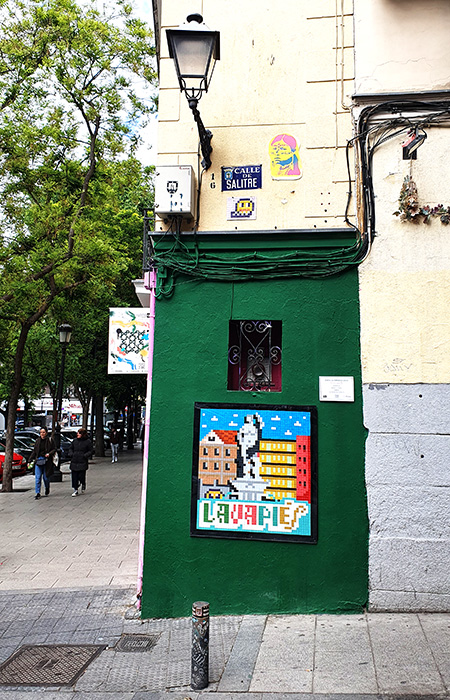
Over time the neighbourhood has changed profoundly, and street art has accompanied that transformation. From the discreet geometric interventions of Eltono in the 2000s to the large-scale murals that now mark many of its streets, urban art has become both a symbol of Lavapiés’ creativity and one of the most visible signs of its ongoing gentrification.
- The stencil boom and Madrid’s early street art scene in Lavapiés
- La Tabacalera de Lavapiés and El Keller as hubs of Madrid street art
- Esta Es Una Plaza, the gardens of Lavapiés
- Institutional Murals and Festivals in the streets of Lavapiés
- The gentrification of Lavapiés
- Where to see street art in Lavapiés, Madrid’s Most Painted Neighbourhood
- My Interactive Street Art Map of Madrid: Murals and Street Art Locations
- How to use my Madrid Street Art Map
The stencil boom and Madrid’s early street art scene in Lavapiés
In the 1980s and 1990s Lavapiés was widely portrayed as a troubled neighbourhood marked by poverty, heroin and decades of municipal neglect. At the same time it became one of the main centres of Madrid’s squatter movement. In 1985 the building at 83 Amparo Street became the city’s first occupied house, and throughout the following decade squats, underground bars and migrant communities reshaped the area’s social fabric.
Much of the political and cultural activity of those years revolved around El Laboratorio, an influential squat opened in 1997 that introduced in Madrid the idea of a squat as a space for neighbourhood initiatives, activism and artistic experimentation. This environment gave rise to the first wave of political street interventions. In the early 1990s stencil artists such as Preiswert appeared in the streets, followed by collectives like La Fiambrera Obrera, SCCPP and Yomango, whose Situationist inspired actions used the city itself as a stage for critique.
Lavapiés soon became the ideal terrain for the emerging stencil scene. Its narrow streets, ageing buildings and relaxed atmosphere offered artists a level of freedom rare in the city centre. By the end of the decade stencils had spread across the neighbourhood, marking the beginning of Madrid’s stencil boom.
La Tabacalera de Lavapiés and El Keller as hubs of Madrid street art
A new phase of the scene began in 2010 with the opening of the self managed social centre La Tabacalera de Lavapiés inside a vast nineteenth century tobacco factory. After more than a decade of abandonment, the building was temporarily ceded to neighbourhood collectives, which transformed it into a space for cultural initiatives, workshops and grassroots projects run through assemblies and voluntary work.
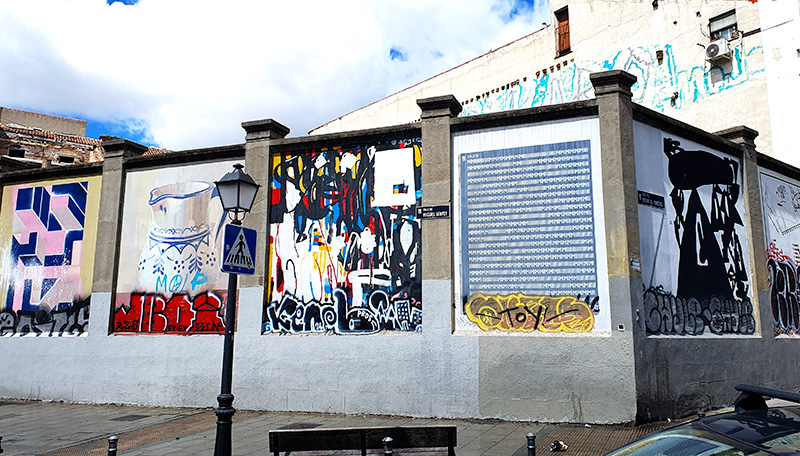
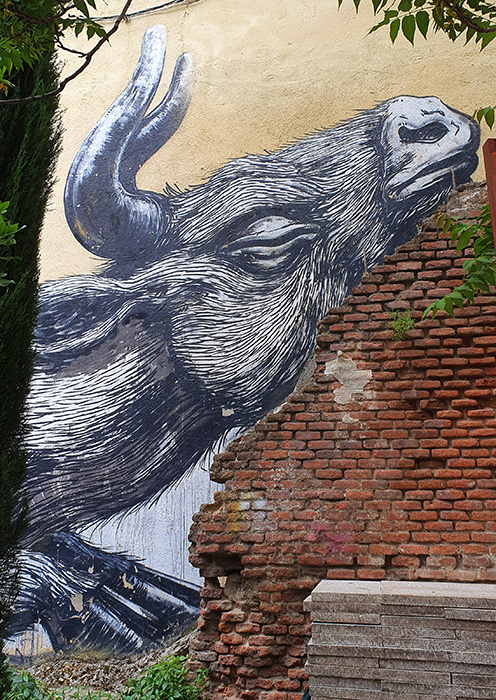
One of the most influential initiatives inside the complex was El Keller, an urban art workshop founded by Ciríl Vidal that quickly became a meeting point for Madrid’s street art community. Through exhibitions, talks and open studio sessions, the space fostered a new generation of artists and organised events such as the independent festival Crítica Urbana. During its early years artists including Ripo and ROA painted large works in the courtyard, marking the arrival of a new wave of muralism in the city. During its intense early years of activity El Keller became the great breeding ground of urban art in Madrid, from which underground figures such as Taltoys and Fatuy emerged, as well as highly regarded artists such as Sabek and Borondo.
Esta Es Una Plaza, the gardens of Lavapiés
Still in Lavapiés, lies Esta es una Plaza, a self managed neighbourhood space that grew out of a citizen workshop organised in 2008 as part of the Urbanacción programme. The initiative transformed a vacant lot on Doctor Fourquet Street that had been abandoned for three decades into a shared garden with vegetable plots, communal areas and spaces for cultural activities.
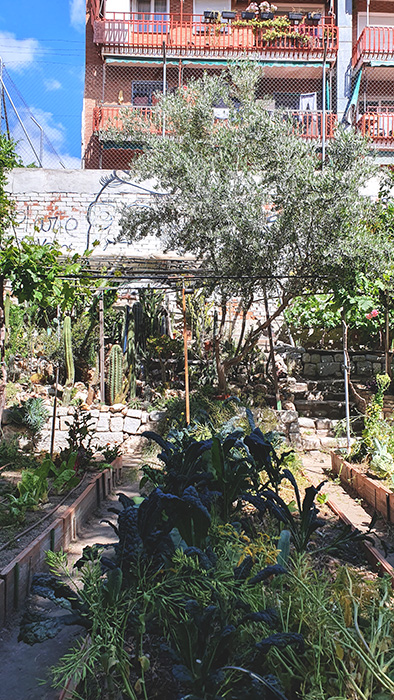
Residents quickly adopted the site and organised to defend it after an initial attempt by the city to dismantle the project. Since 2010 the space has operated through a community association that manages the garden and its activities on a voluntary basis, keeping it open as a meeting place for the neighbourhood.
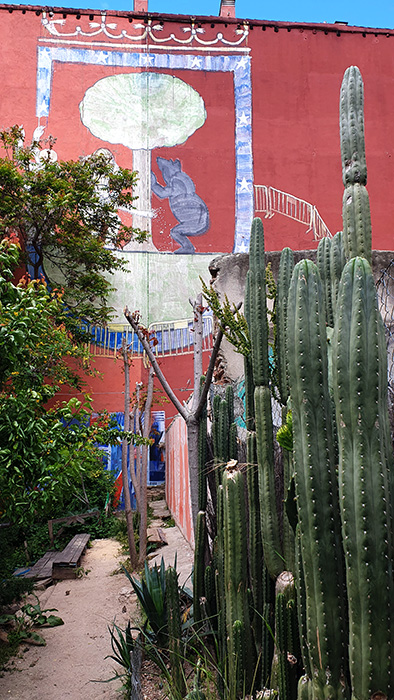
The square also played a small but significant role in the history of Madrid’s urban art. In 2010 the Italian artist Blu painted one of the first large scale murals of the new wave of street art in the city on the wall facing the garden. Soon after, artists such as Roa and Liquen added their own works, turning the space into an early open air canvas where murals and smaller interventions have continued to appear ever since.
Institutional Murals and Festivals in the streets of Lavapiés
From the mid 2010s onward, street art in Lavapiés increasingly moved from spontaneous interventions to organised mural programmes. One of the most visible initiatives was the Muros project, which between 2014 and 2019 commissioned large murals along the long exterior fence of La Tabacalera de Lavapiés. (sadly, they are all gone now)
Around the same time other initiatives promoted the painting of large scale works across the neighbourhood.
A different approach emerged with C.A.L.L.E. Lavapiés, launched in 2014, which focuses on smaller interventions on the shutters and façades of local businesses.
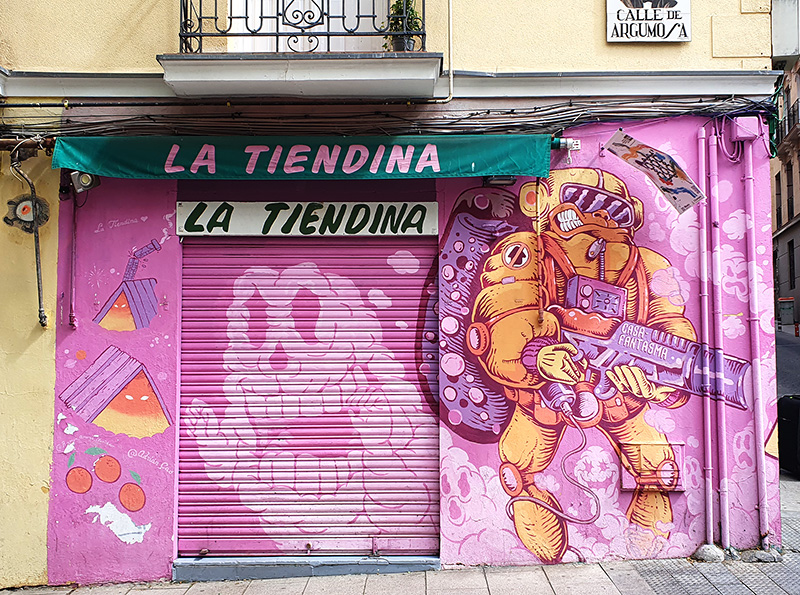
Each year dozens of artists transform shopfronts in Argumosa Street and nearby streets, temporarily turning the area into an open gallery integrated into everyday life.
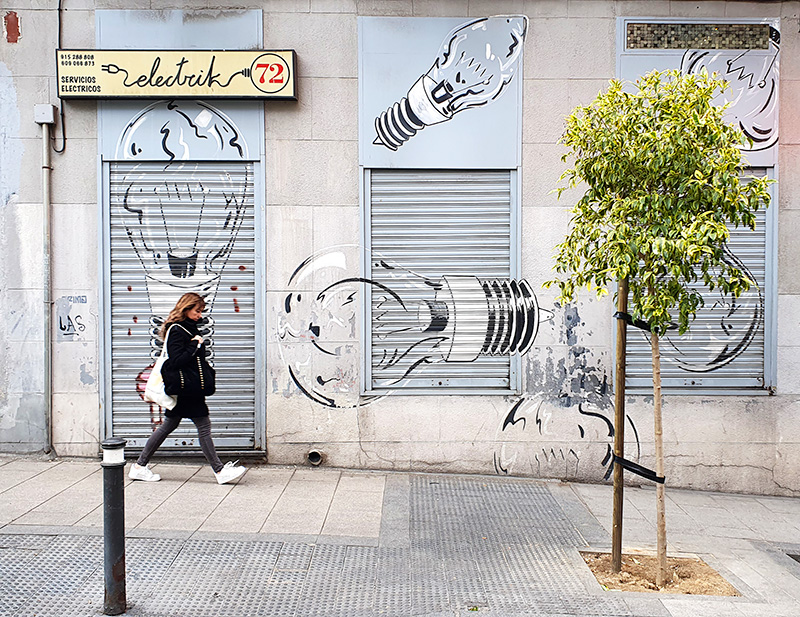
These projects have helped make street art one of the defining visual elements of Lavapiés today. At the same time they reflect a broader shift in the neighbourhood, where official mural programmes and cultural events have gradually replaced the more furtive and improvised forms of urban art that once dominated its streets.
The gentrification of Lavapiés
For decades Lavapiés suffered from neglect and declining housing conditions, a situation that gradually attracted artists, students and alternative cultural initiatives drawn by low rents and the neighbourhood’s independent atmosphere. As this creative scene grew, the image of the district began to shift. Bars, galleries and cultural venues appeared, and major public investments such as the expansion of the Museo Reina Sofía helped redefine the area as one of Madrid’s cultural centres.
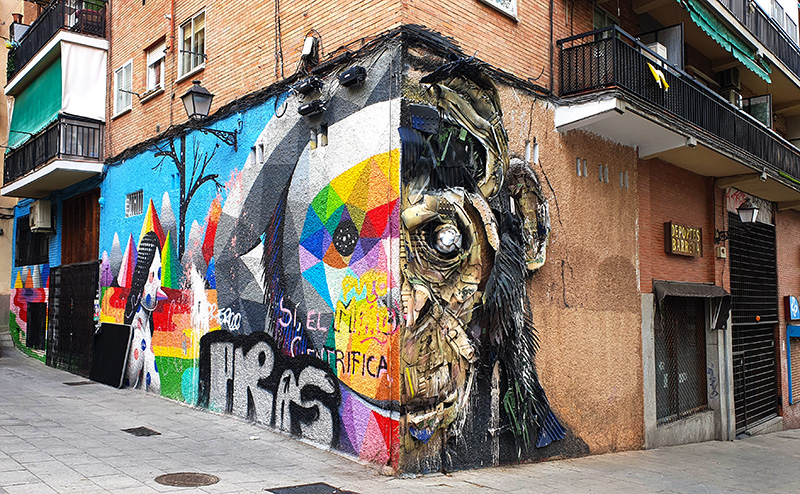
Urban art played a visible role in this transformation. What began as clandestine graffiti and small interventions gradually evolved into organised mural projects and festivals from the mid 2010s onward. As Lavapiés became increasingly popular with visitors, short term rentals and tourism followed, accelerating the process of change. Today hundreds of holiday apartments operate in the neighbourhood, which brought many historical residents to look at the spread of trendy venues, urban art tours and large murals as symbols of a broader commodification of the neighbourhood.
Where to see street art in Lavapiés, Madrid’s Most Painted Neighbourhood
Lavapiés remains one of the most interesting areas in Madrid to explore street art on foot, with murals, painted shutters and small interventions scattered throughout its streets. One of the historic hubs of the scene is La Tabacalera de Lavapiés. For years its exterior walls and interior spaces hosted dozens of murals created by artists connected to the El Keller workshop. Today the exterior façades have been whitewashed and the building is temporarily closed for renovation works, so it is no longer possible to enter, although a detailed virtual tour recorded in 2021 still documents the murals that once filled its interior spaces.
A few minutes away, the community garden Esta es una Plaza regularly hosts rotating murals and smaller interventions on the surrounding walls, making it one of the neighbourhood’s most dynamic places to encounter urban art.
Nearby, Calle de Embajadores is dotted with murals by internationally known artists such as D*Face, Ever, Ben Eine, Bordalo II and the local street art legend Okuda San Miguel.
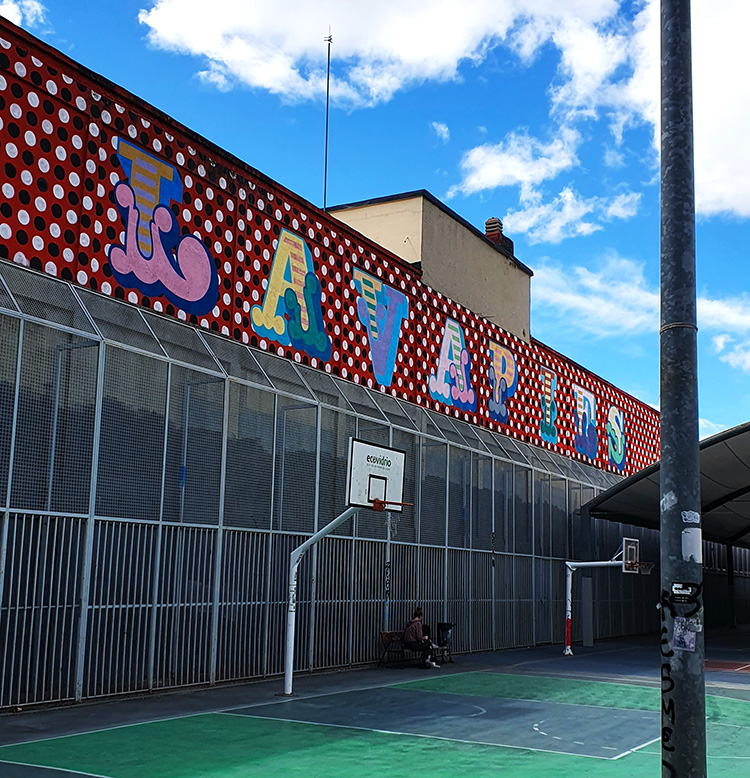
Another key street is Calle de Argumosa and surroundings, where the festival C.A.L.L.E. Lavapiés has invited artists since 2014 to paint the shutters and façades of local businesses.
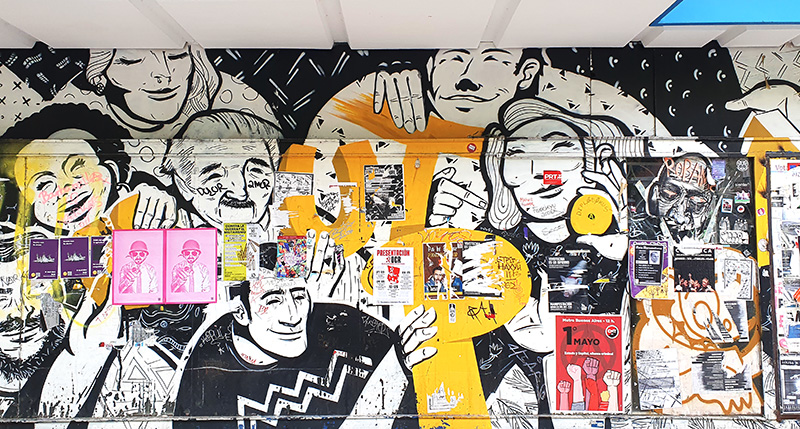
Until recently the neighbourhood also hosted Mind The Wall, a rotating mural project curated by Swinton Gallery and Madrid Street Art Project. The initiative ran from 2014 until 2024, when it was suspended following a change in ownership of the building where the wall was located. The art gallery itself is still active, though, and hosts periodical exhibitions of artists with a background in the streets, next to a bookshop that focuses on graffiti and street art books called Grant Libreria (managed by the same people).
While the scene has evolved from spontaneous graffiti to organised mural projects and cultural initiatives, exploring Lavapiés on foot remains one of the best ways to discover how street art continues to shape the identity and visual culture of Madrid.
My Interactive Street Art Map of Madrid: Murals and Street Art Locations
Lavapiés is only one part of Madrid’s street art landscape. Over the years I have mapped hundreds of murals, graffiti pieces and urban art spots across the city (and beyond!), alongside other cool urban spots and overlooked museums. The interactive map below collects many of these locations and is regularly updated as new works appear and others disappear. Use it to explore Madrid’s street art on foot and discover some of the city’s most interesting urban art districts.
Explore the interactive map below to find street art locations across Madrid and beyond, including Lavapiés, Malasaña, Villaverde, Carabanchel, and Fuenlabrada.
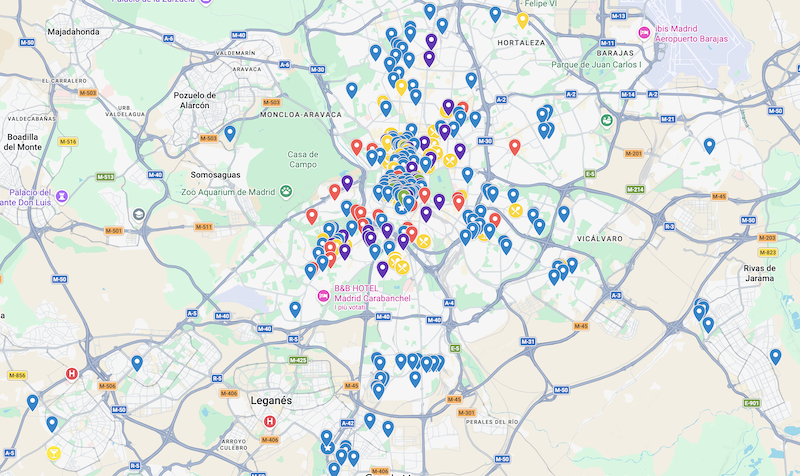
How to use my Madrid Street Art Map
It’s super easy! It’s a regular travel map on Google, so there’s no need to download any app or install anything on your phone. Subscribe to my monthly newsletter and you will receive a welcome email with the link to all my street art Google Maps. If you don’t see the email within ten minutes of confirming your subscription, check your Promotions folder or similar. It must be hiding somewhere 😉