This editorial on BLU’s extreme act against gentrification was originally published in my street art newsletter, Beyond the Walls, which lands in inboxes on the 1st of every month with reflections and unexpected finds. This excerpt is from the August 1st, 2026, edition. Subscribe here to receive future issues.
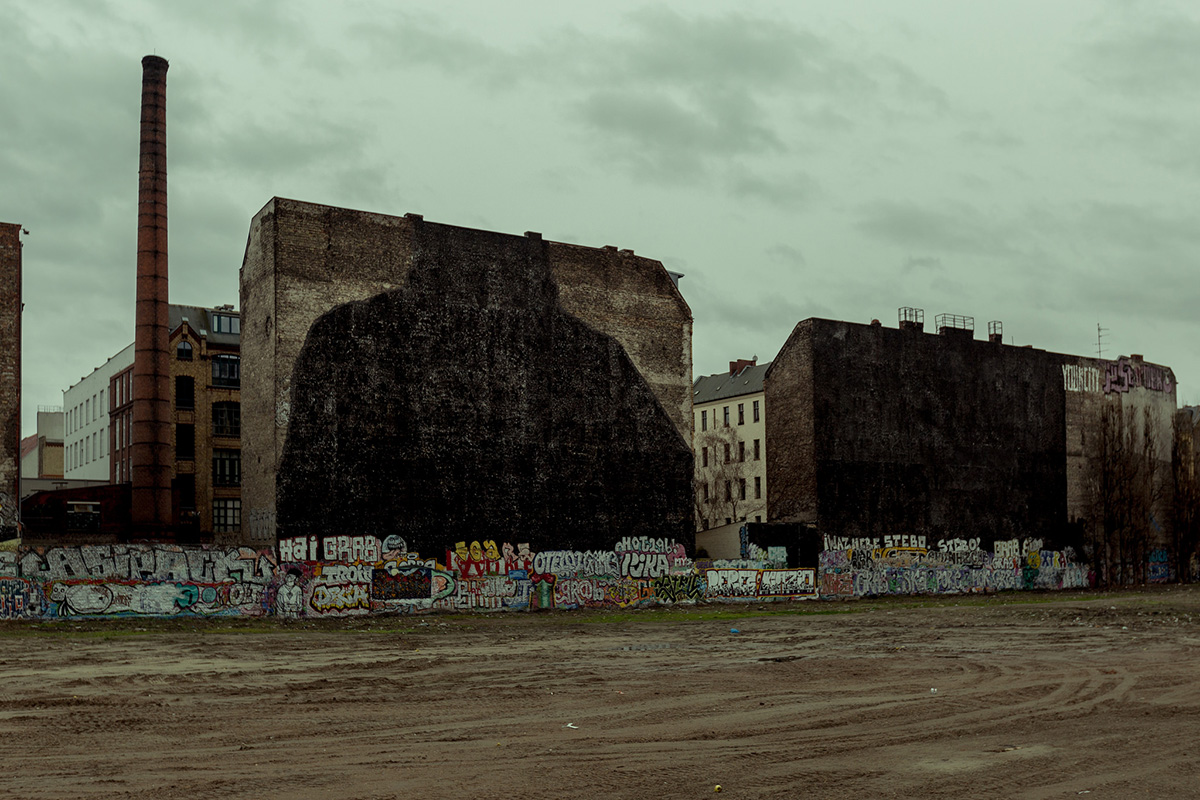
On the night of 11 December 2014, a small group of people began covering two of Berlin’s most recognisable murals with black paint while photos of the operation spread across social media and onlookers tried to figure out why these murals, which had been a part of the city for so long, were suddenly being painted over. At first, many people thought it was the developers who were behind it, since the land the murals were on was scheduled for redevelopment.
But the truth was actually more complex, because the artist, Blu, had had chosen the fate of his murals, turning what initially appeared to be censorship into a deliberate act of self-erasure whose meaning could only be understood through the transformation happening around them.
Blu created the first mural with JR back in 2007, depicting two identical figures from East and West in an image that explored Germany’s reunification and the creative possibilities that had emerged after the division of the city. The next year, he went back and painted the other wall with a man adjusting his tie while two gold watches, linked by a chain, formed a pair of handcuffs around his wrists, creating an image that became increasingly associated with money, power and the constraints of capitalism.
As time passed, the murals grew into landmarks of Kreuzberg and icons of Berlin’s street art scene, showing up in guidebooks and photos taken by tourists until they became part of the same “poor but sexy” image through which the city marketed itself.
Kreuzberg itself embodied that identity, with accessible rents that gave artists room to live and work, while the visibility generated by their creativity gradually recast the neighbourhood as a distinctive cultural destination whose reputation attracted tourism and investment. But the thing is, as property values started to rise, it got harder and harder for the very people who made Kreuzberg so special to actually stay there.
This is one of the central paradoxes of gentrification: the people who make a neighbourhood interesting often help create the appeal that eventually pushes them out, becoming their own worst enemies in the process. The Cuvrystraße murals are a great example of this, since they embodied Kreuzberg’s alternative identity while reinforcing its reputation as a desirable destination, allowing images associated with a critique of capitalism to increase the symbolic value of the neighborhood around them and become a major selling point for the area.
By 2014, this tension had become impossible to ignore, because the vacant plot in front of the murals had been the subject of years of speculative development plans, which put the future of the walls right in the middle of the area’s commercial makeover. A campaign soon began calling for the murals to receive heritage protection, and the proposal appeared entirely reasonable to the thousands of people who regarded them as important works connected to Berlin’s recent history, whose preservation might protect a fragment of Kreuzberg’s cultural identity from the redevelopment taking place around it. The murals had become a big part of the area’s history, and many people felt that they were worth saving.
The debate therefore came to represent two different visions of Kreuzberg: one rooted in the informal and unpredictable life of the street, and another in which that same identity could be preserved within a planned, privately managed development.
Yet from Blu’s point of view, saving the murals wasn’t entirely a good thing, because the new development could keep them even after the community that had given them meaning was gone, turning them into an attractive feature of the new buildings and watering down their rebellious message while offering future residents a carefully preserved piece of alternative Berlin after the people and informal spaces behind that identity had been replaced.
The walls might still look the same, yet those images would operate inside a new economic and social arrangement, lending cultural credibility to the transformation of the place they had once helped define. This is because a mural (and street art, in general) gets its meaning from the wall, street, and neighborhood it’s in, and at the same time, it helps shape how people think about that space. So, when the social and economic life around a mural changes, its significance is bound to change too.
Blu took back control of his murals by covering them up, so they wouldn’t get swallowed up by the redevelopment plans. He was basically destroying his own work, but in a way that made a statement, turning the black paint normally associated with the removal of street art into a way of resisting the transformation of the murals into part of the new development.
City authorities usually use buffing to wipe out street art and decide what gets to stay visible in public space, but Blu flipped the whole thing around, using it to defend his artistic freedom and pull his murals out of Kreuzberg’s redevelopment story. In doing so, he brought street art back to its rebellious roots, showing that its spirit was still alive, even in one of Berlin’s most heavily gentrified areas.
The black paint became a new intervention in its own right, preserving the memory of the murals through their absence and turning their disappearance into a final political statement about the transformation of the neighbourhood around them.
In street art, preserving the physical work can also change what it means once the world around it has been transformed, while erasing it can become a way of protecting its political force before the image is absorbed into a different story. Blu chose to make the murals disappear to defend the connection between his work and the place that had shaped it, leaving the black walls to deliver the final message once the transformation of Kreuzberg had altered the meaning of the original images.