Giulia Blocal
Last weekend I was in Pisa for the outstanding exhibition “Attitude: Graffiti Writing, Street Art and Neo-Muralism” retracing the evolution of graffiti and street art through the different attitudes that urban artists have towards their street practice.
Housed inside the ancient noble mansion Palazzo Blu, the show follows the growth of the urban art movement and the development of four different “attitudes,” namely post-graffiti, street art, and neo-muralism, either figurative or abstract. Across this wide urban range, the selected artists have in common a street background and the fact that they have painted in the streets of Pisa, thus showing how this small Tuscan city holds -indeed- an important place in the international graffiti and street art scene.
A feature of the show I especially appreciated is the presence of QR codes referencing for every artist their body of work in the streets. They act as a potent reminder that nothing of what we see in the rooms of Pisa’s Palazzo Blu would have been possible if these artists hadn’t been developing their recognizable aesthetics in the streets in the first place.
Attitude: Graffiti Writing and Post-Graffiti
The first room is next to the museum entrance. Here we find a wide range of items, from photographs of classic graffiti pieces in the streets to the progressive abstraction of the shape of the letters on canvases, up to the experimentation with different mediums, like sculpture.
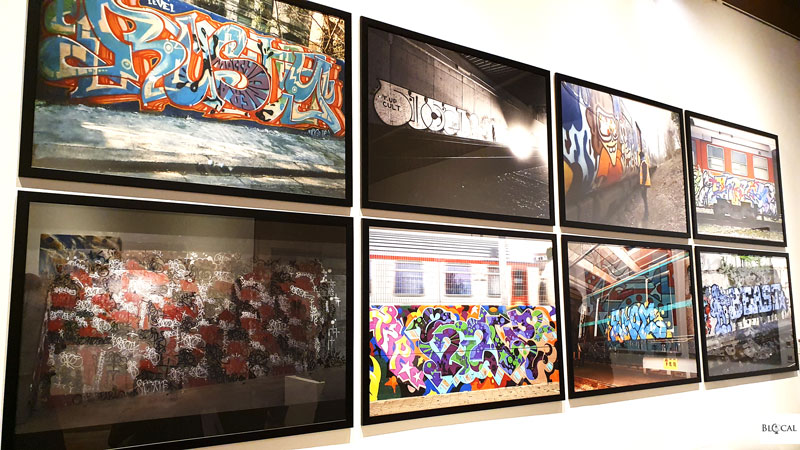
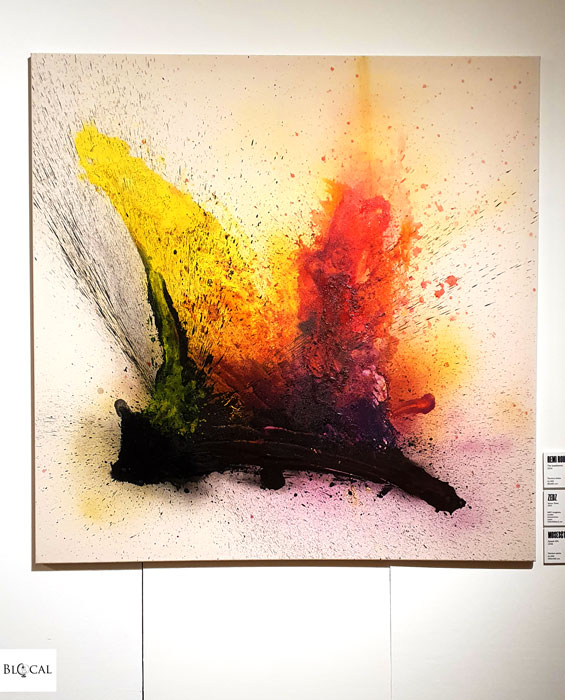
Each one on his own, unpaved path, the graffiti artists featured in this room have pushed their letters toward abstract art while looking for their own way to be creative beyond the rigid rules of style writing. Canvases follow one another, going from letters that are still readable (like RUSTO‘s) to the abstract splash of colors in Moses & Taps‘ masterpiece.
In this room, there are also figurative artworks (by Francesco Barbieri and by EGS) that are not aesthetically derived from graffiti but that refer to graffiti in terms of content, and so depictions of urban landscapes, night settings, and train yards.
Attitude: Street Art
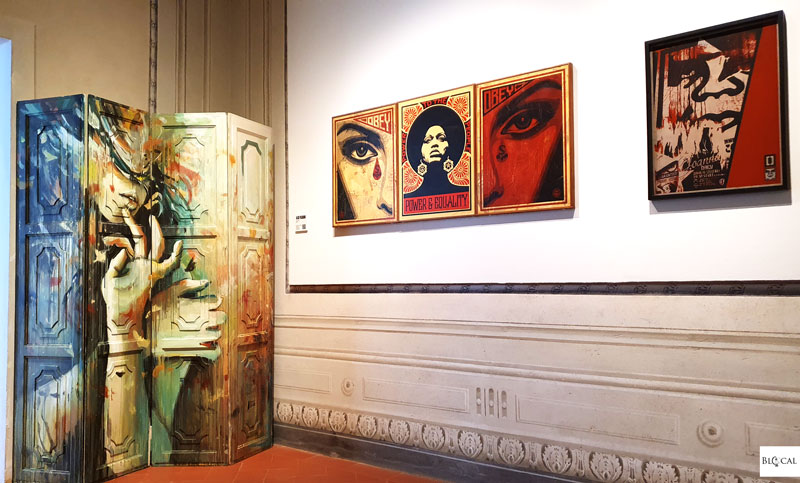
The exhibition continues on the 4th floor. Here we find a first room highlighting the work of street art pioneers. From the 1990s, their work began to appear on different urban surfaces all around the globe, from doors to mailboxes.
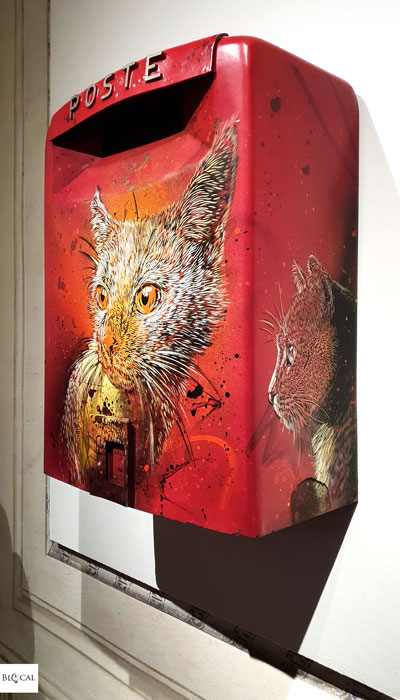
Street art was an illegal phenomenon at its origin, so the pioneers’ works showcased in this room are smaller than the murals we are used to seeing nowadays. Early street artists often took advantage of different mediums -like stencil, posters, and stickers- that would make the execution of the work faster.
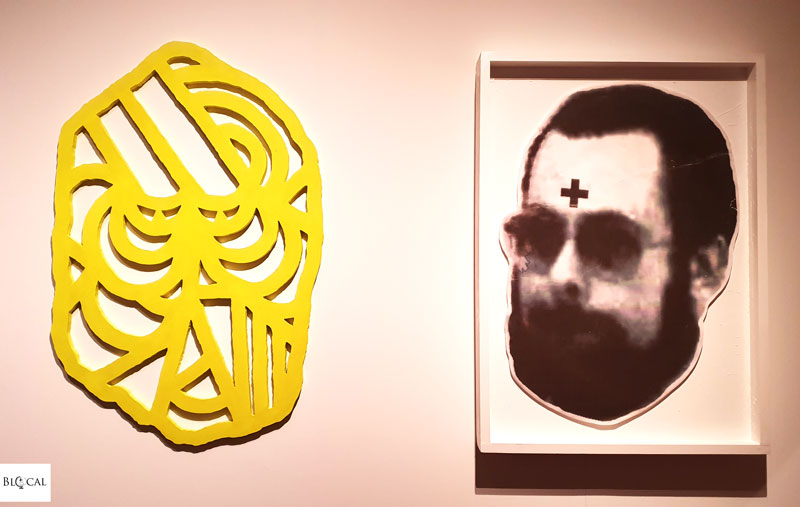
The spread of spontaneous street art brought a new public to rise: people who would typically not go to art museums while they engage with art in the streets of their city. The directness and accessibility of street art (as opposed to Fine Art and Graffiti, both perceived as obscure and incomprehensible) paved the way to the success of the art form, as shown in the following rooms of the exhibition.
Attitude: Figurative Neo-Muralism
From 2007 onwards, street art in Italy went to the next level. From the first actual street art festival, FAME, born as a spontaneous gathering of artists in southern Italy, street art started a metamorphosis into neo-muralism: the production of large-scale murals on city walls.
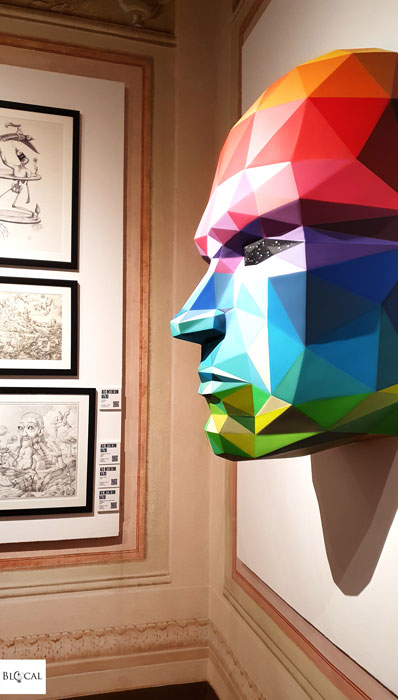
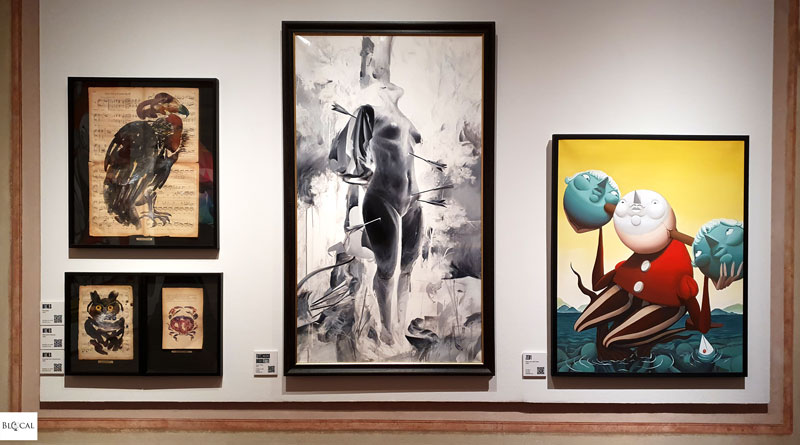
Given their immense dimensions, murals are not made illegally but are commissioned by agencies, festivals, companies, or municipalities, which sometimes also influence the content of the work. Artists who specialize in murals rich in storytelling or purely aesthetic works are the protagonists of the era of figurative neo-muralism. What demanded some level of stealthiness turns into a live performance that sees the street artists paint in front of residents and curious alike.
Attitude: Abstract Neo-Muralism
The last room hosts my favorite artworks in the exhibition: those by former graffiti artists who pushed their letters to abstract art by shifting their focus from writing their name to pursuing the perfect forms, along with research on the relationship between colors and lines.
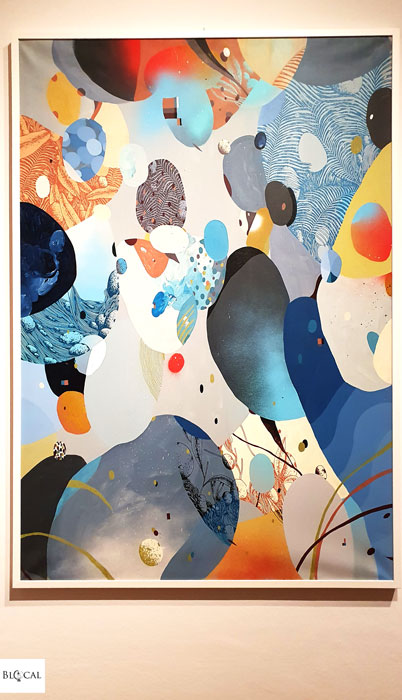
Like last century’s avant-garde movements, which attempted at making art independent from either the depiction of reality or the transmission of a message, graffiti unhooked from its typography roots. When letters lose their primary function of readability, it all comes down to the visual excellence of each piece; now, the key to dynamic and balanced work is the combination of the perfect forms. Cut loose from the alphabet, lines, shapes, and colors won over by visually representing their own freedom and pureness.
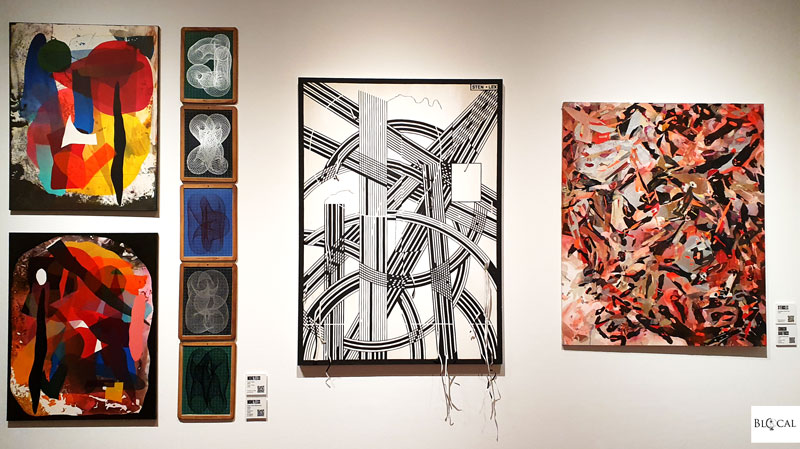
These artists’ aesthetic research focuses on the composition of colors, shapes, textures, and transparencies. Through abstraction, they aim at finding the freedom they felt they had lost after years of painting according to the rigid rules of graffiti writing.
Attitude: Focus on 2501
A room of the exhibition hosts a monthly focus, and the current focus is on Italian artist 2501.
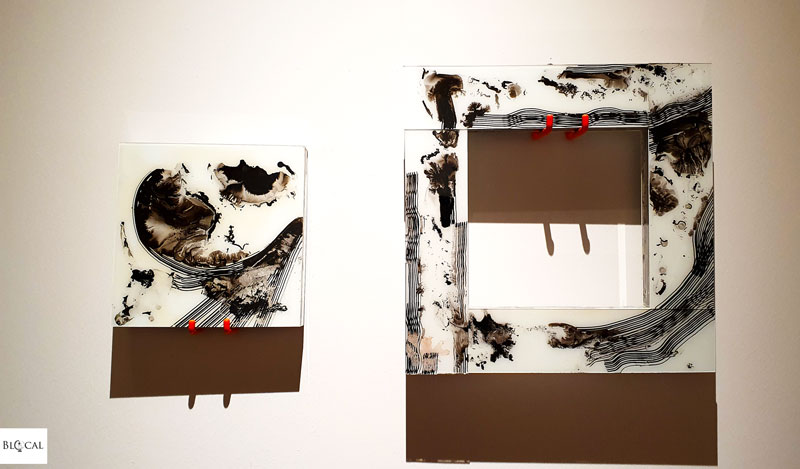
2501’s art practice is the visual representation of the time taken to paint a piece. Rather than an aesthetic goal, the artist researches the causality and the pictorial exploration of his own gesture.
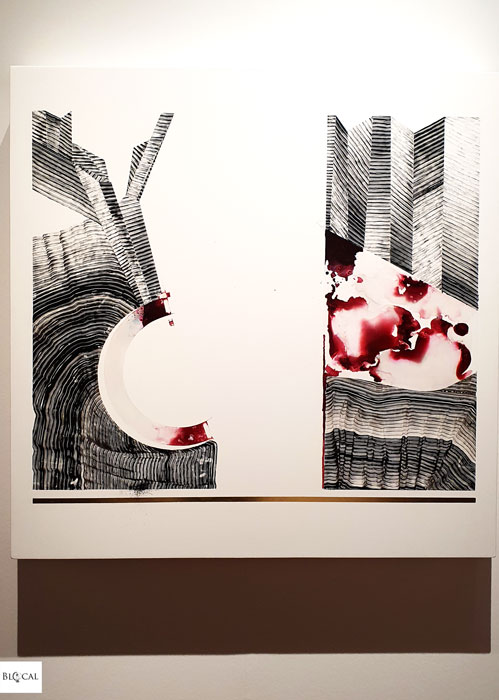
The impromptu, unplanned black line gains meaning as it unfolds in relation to the specifics of the surface. The goal isn’t the perfect composition but replying pictorially to a given situation, clear derivation from his graffiti background.
Watch 2501 live painting in Pisa:
2501’s Live Performance at Attitude: Graffiti Writing, Street Art and Neo-Muralism
La Macchina (The Machine)
In this video, 2501 creates a performance about his creative and pictorial process and the idea of time, two concepts at the core of his artistic production. The performance sees the artist interacting with his ‘Machine,’ a low-tech device he has been developing over the years, starting from the idea of loops and participative art.
Based on randomness and improvisation, the Machine gives back a different output depending on when and how the performance takes place each time. Like graffiti, the performance is an impromptu reaction to a given situation.
In today’s performance, another element of improvisation is music, namely the melodic sound of the Peruvian flute. In the Auditorium of Pisa’s Palazzo Blu, the artist set a land art video from his project Paesaggi Animati (Animated Landscapes) into music while painting abstract shapes on a rotating surface with a brush.
Bonus Track: La Dimora (The Mansion) of Palazzo Blu in Pisa
(an integral part of the exhibition Attitude: Graffiti Writing, Street Art and Neo-Muralism)
The 1st floor of Pisa’s Palazzo Blu houses part of the museum’s permanent collection inside a reconstruction of a 19th-century mansion, decorated mostly by Ottavio Simoneschi’s collection with pieces from the 16th to the 20th century and the original ones of the palace.
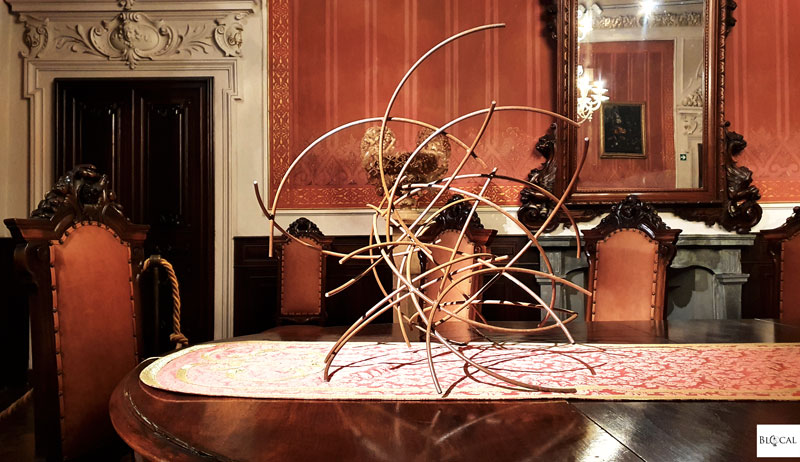
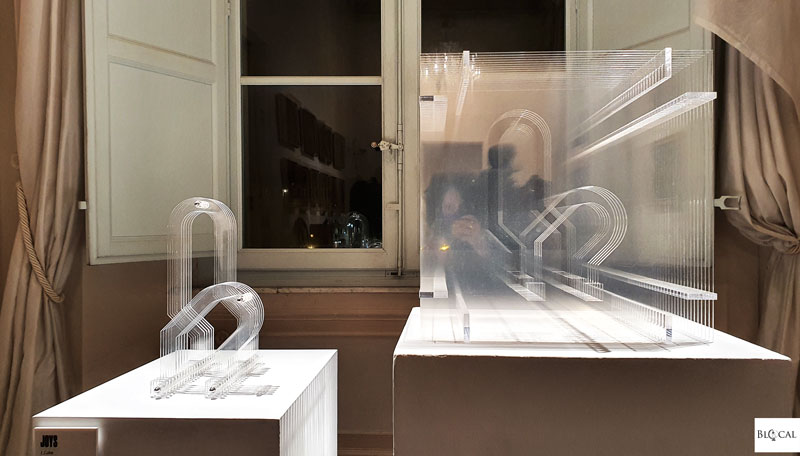
A few sculptures by some post-graffiti artists represented in the exhibition “Attitude: Graffiti Writing, Street Art and Neo-Muralism” (JOYS, Moneyless, and 2501) are scattered around these already richly decorated rooms.
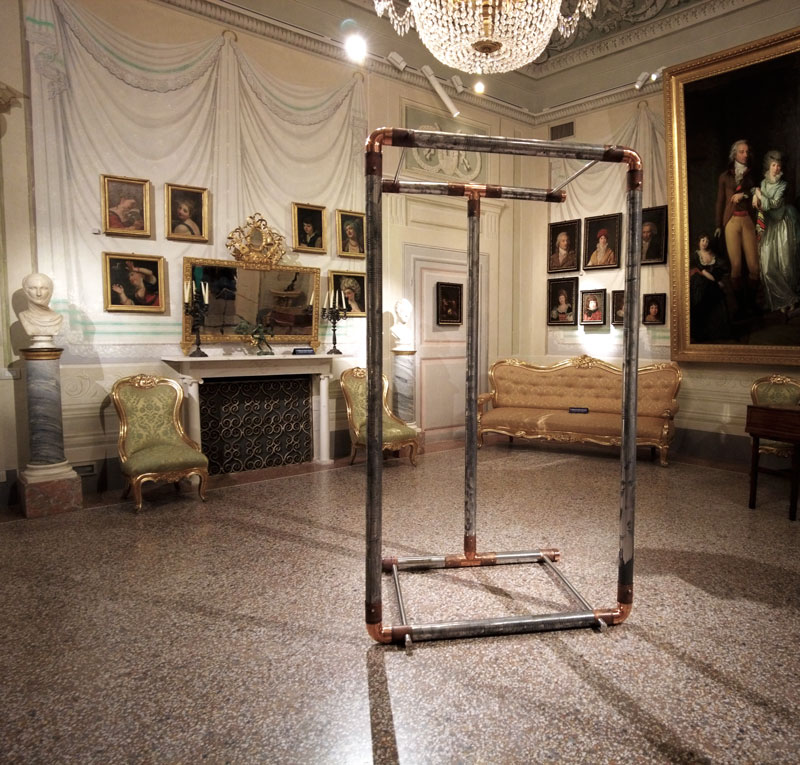
Unexpectedly, the abstract sculptures blend perfectly with the old furniture and portraits of aristocrats already in the Mansion’s room, showing how the concept of beauty and artists’ pursuit of an aesthetic value connect beyond scholars’ labels and art movements across history.
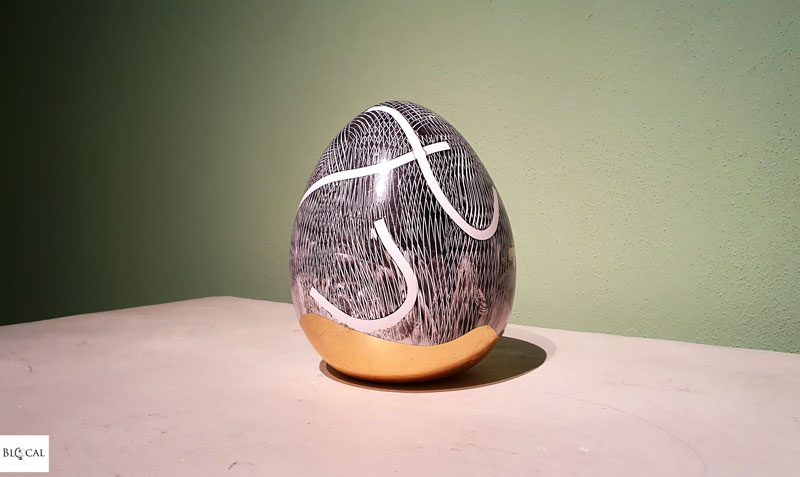
An artistic pursuit that in the last decades has stepped out from museums and art galleries, ending up in the streets of our cities worldwide, shaking up our visual surroundings and inserting elements of beauty into our public space.