Giulia Blocal
This article is an extract from Beyond the Walls, my long-running newsletter about street art, graffiti and the cities around them. The newsletter arrives in your inbox for free on the first day of each month, while paid subscribers get access to additional essays and in-depth city guides.
In this month’s paid edition, I explore how street artists have responded to the protests sweeping across Europe this autumn. From the housing crisis in Portugal and Spain to student demonstrations and police violence in France and Italy, I look at how street art can become part of a protest, give visibility to collective struggles and preserve their memory long after the crowds have left the streets.
Below is the opening section of the essay. You can read the full article on Beyond the Walls with a paid subscription.
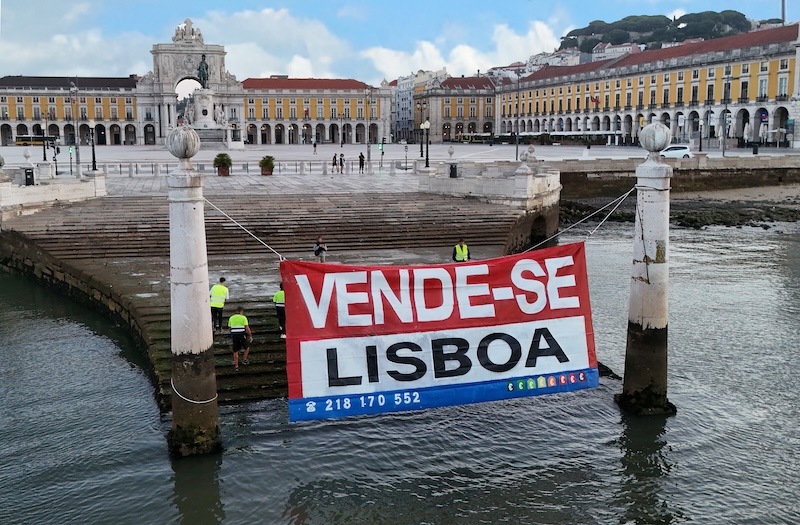
In August 2025, Portuguese street artist Bordalo II put Lisbon up for sale. A gigantic red-and-white banner, resembling an estate agent’s advertisement, appeared between two stone columns overlooking the Tagus River, in one of the most photographed spots in the city. It read Vende-se Lisboa, Lisbon for Sale, complete with a telephone number belonging to the city council’s housing programme. Lisbon was being advertised as a desirable investment in the very place where tourists gather to admire it, while an increasing number of residents were struggling to afford a home.
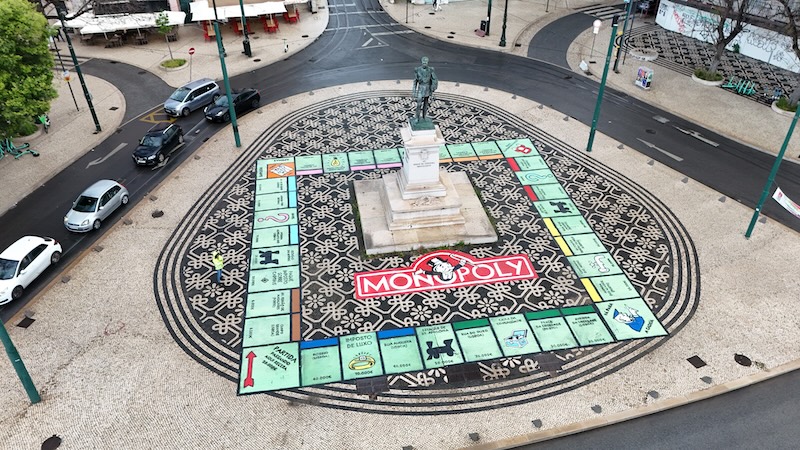
A few months earlier, Bordalo II had transformed Praça Duque da Terceira, near Cais do Sodré, into a gigantic Monopoly board. The familiar squares of the board game had been replaced with Portuguese streets and neighbourhoods, each assigned a price, turning the city’s housing market into a game in which some players could buy properties, collect rents and build hotels, while others struggled to participate at all.
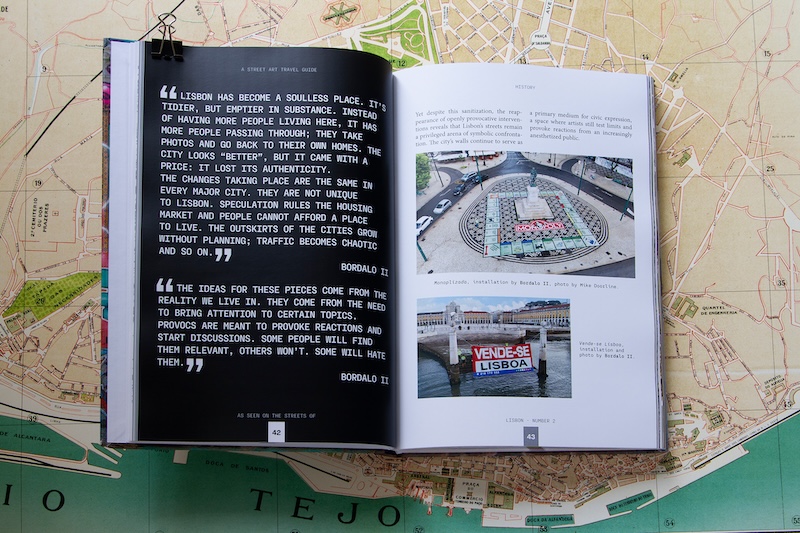
While researching my new book, As Seen on the Streets of Lisbon, I interviewed Bordalo II about his work and the changes he had witnessed in his hometown. His observations reflected a transformation I had encountered throughout my research, as the city’s growing appeal to visitors and investors increasingly came into conflict with the needs of the people living there.
“Lisbon has become a soulless place. It’s tidier, but emptier in substance. Instead of having more people living here, it has more people passing through; they take photos and go back to their own homes. The city looks “better”, but it came with a price: it lost its authenticity.”
Bordalo II
The housing crisis was already deeply embedded in Lisbon’s everyday life, and Bordalo II’s installations brought those tensions into some of its most visible public spaces.
“The ideas for these pieces come from the reality we live in. They come from the need to bring attention to certain topics. Provocs are meant to provoke reactions and start discussions. Some people will find them relevant, others won’t. Some will hate them.”
Bordalo II
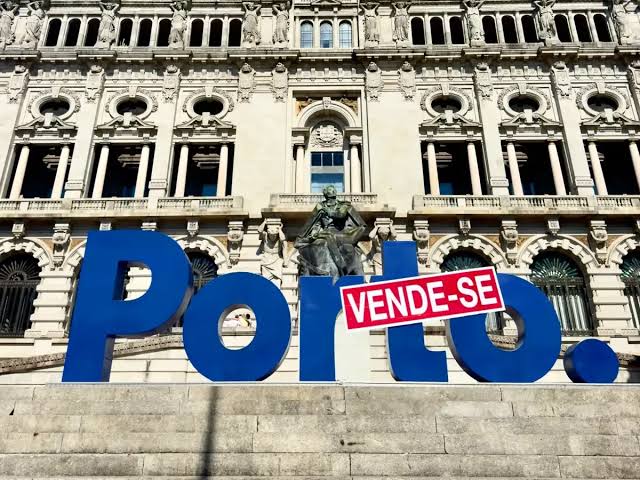
More than a year later, the same red-and-white language reappeared in another Portuguese city. On 15 October 2026, as protesters demanding affordable housing gathered in Porto and police intervention against an overnight encampment sparked further demonstrations, Bordalo II placed a VENDE-SE sign over the monumental letters spelling PORTO outside the city hall. The gesture echoed his earlier installation in Lisbon, but this time it took place in the middle of an ongoing mobilisation, connecting an artistic intervention directly to people taking to the streets to demand change.
Portugal was only one part of a broader autumn of protests across Europe. In other cities, artists were also responding to events unfolding around them, each finding different ways to intervene in the public debate.